Personal Injury Attorney Discusses What To Do After Car Accident

car accident


Claim Your Justice Live Session January 25th 2022

What To Do In The Event Of A Car Accident

Hello, good afternoon, attorney Keith Shindler coming to you for our second Facebook Live. The purpose of these live sessions is to give our viewers and the rest of the Facebook community valuable and useful information on personal injury cases, and personal injury topics. We welcome positive comments and questions, you can always call us to Claim Your Justice™ at 1-888-88-Keith. We are here to help you Claim your Justice™.

Last week, we covered the topic of who pays for the cost when a client has to pursue a personal injury case, it was basic information, but we’re going to start basic. So we covered that item. Today we’re going to cover what to do in the event of a car accident. What’s the first thing necessary to do, you’re going to be shaken up, in pain, concerned about your injuries, and so on.

Make Sure Your Surroundings Are Safe

The first thing you want to do is make sure that your surroundings are safe. Sometimes when an accident happens, there’s a secondary accident because the parties didn’t secure their safety. I do not recommend that you move your car. If you can exit the car and walk out of the car, under your strength, I suggest you do that. If you can, make sure your hazards are on, and you’re giving approaching traffic any possible notice that there’s an accident ahead.

Of course, if you’re injured, the first thing you need to do is call the ambulance. The second thing you should do, if you can, is call 911. I understand these are all very basic pieces of information, but I need to relay this information to you. Although we know what to do in this calm setting that we’re in now, sometimes when there’s an accident, you’re nervous, you’re not going to remember what to do.

Hopefully, my reminding you of these things will help penetrate them into your memory so that you’ll know what to do in the event of an accident. Once the ambulance comes, they’re going to give you the medical attention you need. Of course, if they take you to a hospital because you’re injured, you’re not going to be able to do this next piece that I’m going to talk about.

Take Pictures If Possible

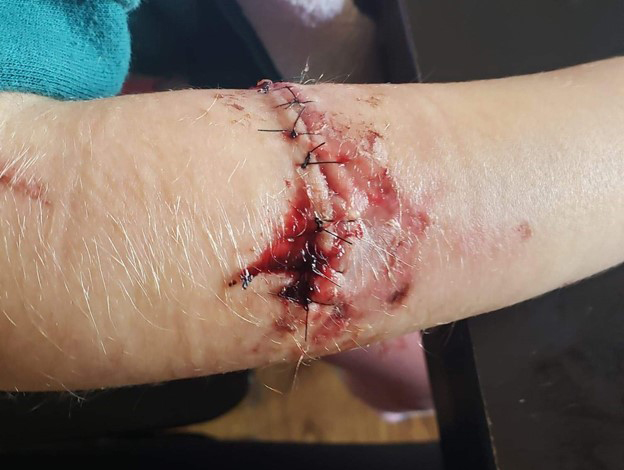
It’s very important to take pictures of the area where the accident happened. If you could take pictures of the car that struck you, or the truck that hit you, do that. Take pictures of any important street indicators, if they’re under construction, you may want to get a brief couple of pictures of the construction site.

Why is that important? Sometimes the car that hit you may move, and you may not be able to secure the pictures, or the mechanics of how the accident happened can be reconstructed through the pictures that you take.

Don’t Worry About Your Car

My job is to make sure my clients get the treatment that they need. So if you need to go to the emergency room, you should go to the emergency room. The ambulance, of course, will ask if you need to go to the emergency room? How do you feel? Many times a client will say I don’t need to go to the emergency room. In part maybe because they’re not injured, but they’re also very worried about their car.

Clients have asked me in the past if I go to the emergency room, what’s going to happen in my car, it’s going to get towed, I’m not going to find it, that was a new car, and so on. Very real-life things. However, your health, and dealing with your injuries are critical. If you don’t go to the emergency room with the ambulance, then you may go after you secure your car. Sometimes if you’re injured, the ambulance driver may not give you the choice because they’re going to make the assessment you need to go.

Let’s say the accident happens and you tell the paramedics that you don’t need to go to the emergency room. A couple of hours later at night, or the following morning, you’re in a lot of pain. You can either go to the emergency room then or if you can get in to see your doctor, you can get the follow-up treatment that way. Sometimes clients call me and say what do you think, I had an accident happen, should I go to the doctor? That’s not a decision for me to make, that is a decision for you to make. If you’re injured you should go get the treatment that you need.

Don’t Talk To The Other Party’s Insurance Company

Sometimes after an accident happens, you’re going to get a call, it could be the same day, it could be the next day, it could be a couple of days later from the responsible party’s insurance company, be very careful here. They’re going to ask you how you’re doing, they may offer you a $500 settlement right away to settle your case. They’re also going to ask you to give a recorded statement.

I do not suggest or recommend that you give a recorded statement.

Get Experienced Legal Representation

Of course, the final thing you should do is make sure you get the proper legal representation. That’s where the attorneys at Claim Your Justice™, come to your rescue and help you prosecute your case. Again, you can reach Claim Your Justice™ at 888-88-Keith, my name, Keith Shindler.

One of the other things I want to do with each Facebook Live session on the 2nd of each month, is I want to talk about a real case. So I’m going to start with that today.

It’s cold, it’s snowy, it’s windy. Lots of ice. Well, slip and fall cases happen all the time. Many of them are very difficult to prosecute, and many of them aren’t eligible for recovery because you may have to watch where you’re walking, you may slip and it was no one’s responsibility.

However, we recently signed up a new case two days ago, where a client tripped and fell over an uneven sidewalk. It was about four inches separated, and it was at night. Interestingly enough, around the sidewalk were painted indicators of upcoming construction. However, there was no warning, no construction lights, there was no indication to walk on the other side of the street. Our client tripped and fell at night. It was not a well-lit street.

The client had surgery on her broken wrist and also had to have staples in her head. So I’m going to track this case as it goes along through the prosecution. I will keep you updated. It takes a lot of time, but we’ll have lots of time to share.

Remember, if you’re injured in any type of accident, car accident, trip, and fall, medical malpractice, or wrongful death. Let us help you Claim Your Justice™, call 847-434-3555. Thank you. This has been Keith Shindler, have a successful rest of your week.
What are the Most Common Personal Injury Claims in Illinois?

Personal Injury

Personal injury cases are everywhere. They are reported in the news, in movies, and certainly, in advertisements that you see and hear every day. But what is a personal injury case, and what are some of the more common personal injury claims in Illinois?

What is a Personal Injury Case?

Personal injury law is a type of civil law. In a personal injury claim, a jury or judge will award money damages. Unlike criminal cases, there are no criminal penalties, jail, or state prosecutor involvement in a personal injury case.

At its core, a personal injury lawsuit says that somebody did something careless, negligent, or in a way that other people, acting diligently, would not do. To see if someone was negligent and caused your injury, the attorneys at Claim Your Justice look to see if the other person, or company, or worker acted the way other reasonable people would act.

Carelessness that can lead to negligence in a personal injury claim can be the act necessary to make a successful claim. For example, if a product is stacked improperly in a store and then that causes an item to fall on a customer’s head, it can injure them. Driving a car too fast that  causes an injury or deadly accident. Injuries can also result from an omission. If there is a failure to warn of a slippery floor and then someone can slip and sustain injuries or failure to install handrails along a stairwell can also cause a fall.

What are Common Personal Injury Claims in Illinois?

Any situation where someone suffers an injury, mental or physical, can possibly lead to a personal injury lawsuit. That means that personal injury lawsuits can happen in more ways than can be listed in any one place. But despite the wide variety of personal injury cases, there are some types of claims or cases that tend to occur more often than others.

Here is a short description of the most common types of personal injury claims that tend to happen in Illinois.

Cars and Car Accidents

Almost any kind of car accident can lead to a personal injury case. Given the number of cars on the road, it’s no wonder that car accidents account for a large percentage of personal injury claims.

Car accidents tend to increase from year to year. From 2017 to 2018, there were over 7,000 more car accidents, for a total of 319,146 car accidents in Illinois.

The most common types of car accidents include things like:

  • Rear-end accidents.
  • Lane change accidents.
  • Intersection accidents.
  • Distracted driving.
  • DUI-related accidents.
  • Car accidents where a car collides with a pedestrian, motorcyclist, or bicyclist.

Car accidents can be caused by individual drivers, but also corporate drivers, such as when commercial trucks or business delivery cars cause accidents.

Remember that car accident victims are not just the drivers of the vehicles. Passengers can also have personal injury claims after a car accident. So can spouses of injured victims when the victim is injured so badly it affects their ability to take care of their spouse or otherwise affects their marriages.

On-Premises Accidents

Accidents often happen on business premises, which is why these cases are often called “premises liability” cases. The most common of these types of cases are called slip and fall accidents. Although this category can also include objects falling on people’s heads or any other type of accident that happens while you are a customer or visitor on someone else’s property.

Businesses must keep their premises safe. Although substances on the floor that cause people to fall are quite common, there are also other kinds of injuries that can happen on a business’ premises. These include:

  • Objects left in customer walkways that cause people to fall.
  • Poorly stacked objects on shelves that fall on people, injuring them
  • Attacks or assaults by business employees
  • Failure to provide warnings of conditions on the property that may be dangerous.
  • Failure to maintain safe stairways, escalators, and elevators

One common form of premises liability cases is negligent security. This is where a criminal injures you while you are on someone else’s property. Although the property owner didn’t directly attack or injure you, the business owner may have created conditions that made it easier for you to become a crime victim.

This often happens when landlords or shopping mall owners don’t provide human or video security monitoring, gates, proper lighting, or other elements that tend to deter crime.

Note that in most cases, you will have to be an invited guest, or a customer of the business to sue for your injuries. Trespassers often will have a difficult time suing for damages that happen on others’ property.

Nursing Home Abuse

The population or elderly people living in our nursing homes is amongst the most vulnerable in our society. Not only are they often sick, infirm, and unable to care for themselves, but their family is not there to look after them and to make sure they are being taken care of.

Many nursing homes are understaffed or use staff that is untrained to do their jobs. Many don’t have proper practices and procedures, to ensure the safety of their residents. They may allow abuse to happen to residents, whether at the hands of staff, or other residents. They may allow residents to roam and wander into areas that they should not be, leading to injury.

As many nursing home residents also need medical attention, often negligence claims include basic personal injury claims, as well as medical malpractice claims, if a patient is injured while getting medical attention

Because of residents’ advanced age, and often frail health, even the slightest failure to exercise caution and diligence, can lead to catastrophic injury, and even death.

Supervision of Kids

When kids get injured, we often dismiss the injuries as being “horseplay,” or as “kids being kids.” But there are a lot of scenarios where kids are supposed to be supervised by adults, but are not, such as in schools, after-school care, or daycare.

Even if the supervision is not  being provided by an institution, another adult who was supposed to monitor a child, but did not, can be sued for negligence. For example, a parent who allows young kids to play in a pool, without watching the kids, can be liable for a personal injury claim. This is true if one of the children gets injured while the adult is not monitoring them

Dangerous Products

Whenever a product injures someone, the manufacturer and retailer can be liable for the injuries that you sustain.

Often, products are just manufactured poorly, and inconsistently. Potentially, 100 of the same product can be fine, but the 101st can be dangerous. This is because the 101 product was not manufactured like the first 100 were.

Other times, even a product that is perfectly manufactured is dangerous, simply because of the way it is designed. For example, medical device manufacturer 3M was recently sued for selling defective earplugs to the military, causing injuries to servicemembers. The earplugs worked exactly as they were designed to work. The problem was that the way they were designed, made them ineffective in protecting against hearing loss.

Often, experts need to be employed by your personal injury attorney to evaluate a product or its design. Then it can be better determined whether or not a product was defective or designed in a dangerous manner

Medical Malpractice

Not every bad medical outcome is a result of medical malpractice. However, sometimes doctors do something or fail to do something that should be done in the process of our medical care. When that medical error causes an injury, you may have a claim for medical malpractice.

According to the national practitioner data bank, medical malpractice claims, and payments went up significantly around 2019-2019. There was a decline in 2020, likely due to COVID reasons. Just from 2015-2019 in Illinois, there were close to 2,000 medical malpractice claims yearly.

However, this is an accounting of reported claims and errors but not actual lawsuits, which are likely much higher than those numbers. These numbers also don’t include settlements that may have happened, before any lawsuit was filed.

Any medical provider can be liable for malpractice, including nurses, therapists, radiologists, or acupuncturists, virtually any profession that renders expert and professional medical skill, aid, and treatment can be held accountable for errors.

Malpractice claims can include failure to diagnose injuries or symptoms, or diagnosing the wrong illness or disease. Doctors can prescribe the wrong medicine, ineffective medicine, or may fail to recognize your symptoms as needing treatment at all.

Damages for Your Personal Injury Claim

With all of these personal injury claims and lawsuits, you can get damages for out-of-pocket expenses, such as medical bills, lost wages, or the cost of necessary medical devices. These costs can be awarded for current expenses, but also for expenses that you may incur in the future, for longer-term or more catastrophic injuries.

You can also get damages for your emotional or mental injuries. The law recognizes that many types of injuries can cause depression, loss of the enjoyment of life, or cause fear or anxiety. That’s in addition to the pain that you may have suffered because of the accident, your injuries, or the procedures that you had to undergo, in treating your injuries.

Whether your injury is common or not, we can help with your personal injury claim. To see if you may be entitled to compensation or payments for your accident or injuries, call our Schaumburg personal injury attorneys at Claim Your Justice to schedule a free consultation at 847-434-3555.

Personal Injury Attorney Discusses Personal Injury Cases

personal injury law


Claim Your Justice Live Session

Welcome to the Claim Your Justice Facebook Live Stream, I’m attorney Keith Shindler. I look forward to providing you with valuable and useful information regarding personal injury cases, and personal injury topics. Throughout future live stream sessions, I’ll discuss some information that you may consider basic.

However, I’m also going to discuss information that is a bit more complex. I welcome your positive feedback and questions, and I can be reached at 888-88-Keith, or you can email us here and message us on Facebook.

Who pays for the costs associated with a personal injury case?

There are two components of these costs. One is the attorney fee that would be paid to our firm for achieving a recovery for your injury case. The second component is the costs related to developing and winning your case. Let’s talk for a second about the attorneys’ fees.

With personal injury cases, the attorney fee is based on a contingency fee arrangement. What does that mean? It means that my fee is contingent upon winning your case, I only recover my fee after we win your case. That’s the contingency component of it. I don’t view that as a cost. It pays to have an attorney, it doesn’t cost to have an attorney.

The next piece of developing and winning a personal injury case is the cost involved in gathering your medical records. That’s somewhat of a basic cost, but sometimes it adds up. It can be thousands of dollars, depending on how much treatment a person had, how many doctors they went to see, how many surgeries they may have had, etc. So that cost generally adds up into the hundreds, if not thousands of dollars.

Cost of Litigation

You also have a cost if we’re going to have to litigate a case. Litigation can get very expensive. Our firm advances those costs. They include such costs as filing a lawsuit, well, that’s obvious. Then there are other costs involved in taking a deposition, getting a deposition transcribed, hiring someone to go out and take photographs of a scene, hiring an expert witness, and so on. These are costs that sometimes aren’t considered. They add up quickly and are advanced by our firm for the pure goal of winning your case.

Medical Evaluation

There is also a cost involved in perhaps getting our clients evaluated by a medical specialist. For instance, let’s say a client has PTSD, Post Traumatic Stress Disorder. If that were the case I would want to send them to an expert who can evaluate them, test them, and then write a report. That’s a cost as well.

Or, my client could have an orthopedic injury and I want to understand what the permanent nature of that injury is, so I send them to an orthopedic specialist to have their medical records reviewed, get them examined, and then have a report written. That’s an additional cost. We work as a team here, together with our clients.

At Claim Your Justice, we care about our clients and we look to maximize the recovery the client can secure. The court costs are something every client worries about, and my goal is to help the client understand every step of the process as I work on their case. The goal is always to win for the client, and to recover the max amount of money for the client.

Contact Our Personal Injury Attorneys

This is just our introductory Facebook live stream so I don’t want to get too complex, or talk for too long (hopefully I didn’t put anyone to sleep out there). Please remember, for any personal injury case, for your friend, for your family, for yourself, or your coworker, call the attorneys at Claim Your Justice at 847-434-3555. Thank you and I’ll see you in two weeks with another live session.

What You Should Know About Illinois Dog Bite Laws

Dog Bites

Dogs are part of our families. We love dogs and care for them like they are our children. But unlike children, dogs are animals and can cause serious injuries to others. Sometimes, personal injuries are caused out of anger, temper, or aggression. Other times, the injuries people sustain by dogs are totally accidental.

If you are injured by a dog in Illinois, our Illinois dog bite lawyer in Schaumburg can do many things including explaining your rights, explaining the law so you can have a better understanding of it, and recovering money for damages related to your injuries.

The following is a short explanation of what the law says as well as the rights that victims have when they are injured by dogs.

Damage By Dogs

Regardless of a dogs’ motivation or intentions, dogs can do a lot of damage to a child or adult. Dog bites can cause:

  • Skin and tissue damage, massive bleeding, and related infection to skin and tissue
  • Nerve damage
  • Scarring and deformity
  • Fractures to limbs
  • Damage to tissues
  • Septicemia
  • Crushing-type injuries

How Common Are Dog Bites?

There is a lot of debate as to why a dog bites. Some dogs are genetically prone to biting. Others may bite out of play, fear, being sick. Some dogs bite because of poor socialization or exposure to society at a young age.

Although dogs are man’s, and women’s, best friends, dog bites are still very common in Illinois and Nationally. Sometimes it’s an aggressive bite, and sometimes it’s a playful nip. Those teeth in your dog’s mouth can do severe and real damage to the human body.

The statistics bear out how dangerous dogs can be. There are between 4-5 million dog bites every year, according to the Centers for Disease Control and Prevention (CDC). A study by the U.S. Postal Service ranked attacks on postal workers as a good indicator of dog bites in general. The study found that Chicago, Illinois had the fourth-highest number of attacks on postal workers. The most recently updated statistics from WorldAnimalFoundation.org posted on March 12, 2024, the number of dog bites nationwide is 4.5 million and half involve children.

Most of those dogs are not spayed or neutered, according to the ASPCA.

According to a CDC study, pit bulls are the dogs most responsible for dog bite deaths. Then, Rottweilers, Shepherds, and Huskies are also all high on the list for breeds that can inflict deadly bites.

Controlling a Dog

Like many states, Illinois requires that all dogs be leashed when out in public. However, the law goes beyond that. It also requires that dogs on private property, like a private home, be contained by a fence or wall that is at least six feet high.

The owner of a dog that escapes a leash or enclosure is liable for damage caused by the dog. This is true even when property damage results that is unrelated to any kind of personal injury.

Strict Liability

Often when someone’s dog bites another person, the owner’s first reaction is that the owner never knew the dog would bite. Or the owner may explain the dog has never bitten anybody else. The dog may even look sweet and harmless. However, in Illinois, none of this is a defense.

That’s because unlike in some states, and popular myths, Illinois dog bite laws have no “one free bite rule.”

This “one free bite rule” is a rule that allows a dog owner to escape liability if this is the first time the owner’s dog bit someone. This doesn’t apply in Illinois. You do not need to prove that the victim had any prior knowledge, or that the owner should have known, that the dog was dangerous, or that the dog could bite.

It doesn’t matter what the owner of the dog did or didn’t do, or what the owner was doing at the time of the bite. The owner is automatically liable for injuries caused by his or her dog. This is called “strict liability,” and it makes a dog bite case easier to prove for an injured victim.

It also doesn’t matter what kind of dog, the dog’s size, or what the dog’s breed is.

Criminal Liability

Although in civil court and in a personal injury case, there is no need to prove someone knew in advance that their dog was dangerous, that knowledge does matter in criminal court. Illinois dig bite laws say that someone who knows their dog is dangerous and still allows the dog to bite someone can be convicted of a felony.

However, someone does not have to have broken any criminal laws, to be liable to pay you damages for a dog bite in civil court.

More Than Bites

We all know that dogs can injure people in ways other than their mouths and teeth. Sometimes, dogs are just being playful such as when they jump on someone and knock them over. Illinois dog bite law holds owners responsible for all injuries caused by a dog, not just bites.

That means that the owner is liable, and may owe you money damages for your injuries, so long as the dog did something that caused your injury. The dog may not have even touched you. Imagine a situation where a dog chases you, even playfully, but as you run away you slip and fall. You could still sue and seek compensation for your injuries under Illinois dog bite law if the dog’s chasing caused you to run and fall.

Even if the dog is on a leash, the owner is still liable. Just like with actual bites, what the owner knew in advance, or what the owner was doing at the time the dog caused injury, doesn’t matter. An Illinois dog bite lawyer in Schaumburg can help you determine if your injury was caused by a dog.

Who is the Owner?

When someone gets sued for allowing their dog to bite or injure someone, a common defense, or attempted defense, is that the person sued doesn’t own the dog.

At the time of the bite, the dog may have been under the control of a friend, relative, or dog sitter. Maybe the dog is shared between spouses, significant others, or parents and adult children.

Under Illinois dog bite law, victims do not need to prove who was the actual, legal owner of the dog. That would be near impossible, given that dogs don’t have ownership titles the way that other property, like cars, often do.

So long as someone is watching a dog, handling a dog, or has the dog in the person’s possession at the time of the bite or attack, that person is liable. It is no defense that the person is not the actual legal owner of the dog.

Where there is both an owner, and someone different that was controlling or who possessed the dog at the time of the accident, both the owner and the other person controlling the dog, may be liable to you for your personal injuries.

The dog does have to have an “owner,” as defined by the law. In other words, the dog can’t be a stray dog. Although if you are bitten by a stray dog, you could have a personal injury lawsuit against the owner of the property that may have allowed stray dogs to roam free.

Defenses to Dog Bite Cases

There are some defenses to a dog bite case under Illinois dog bite law. These are things you can expect the insurance company or the defendant to argue in your dog bite case.

The first common defense is that you did something that provoked the dog, or which caused the dog to bite or injure them. Sometimes this is obvious. There are things that we do that can antagonize, taunt, or rile up an otherwise non-dangerous animal.

Other times, this defense requires a bit of “dog psychology.” Your Illinois dog bite lawyer in Schaumburg may hire an expert witness to prove testimony, as to what exactly is provoking behavior and what isn’t.

Also involving a bit of dog psychology is the defense of protection. If a dog is acting to protect itself, its offspring, or another human, you cannot sue for injuries caused by a dog bite.

As in other types of personal injury cases, if you are a trespasser, even if you were not a trespasser, but were doing something illegal on someone else’s property, you cannot sue if a dog injures you.

Time Limits

You only have two years to file a lawsuit for any injury caused by a dog. You should act quickly, as often, your Illinois dog bite lawyer in Schaumburg attorney will need to do some research before simply filing your case. Also, you want to make sure that there is time to do that before a lawsuit is filed. An exception to the two-year rule is when the victim is a minor.

Compensation

Remember that if you are a dog bite victim, you can receive compensation for medical expenses, lost wages, or other financial losses you’ve suffered.

You can also recover from fear, anxiety, pain, suffering, or other mental or emotional trauma that was caused. These are all-natural reactions to being attacked by an animal. Illinois dog bite law, and in fact, Illinois personal injury law in general, allows victims to recover compensation for mental pain and trauma, including PTSD, where there is also some type of physical injury suffered by the victim.

Have you been bitten or injured in any way by a dog? We can help. Contact an Illinois dog bite lawyer in Schaumburg to help investigate your case and see if you are entitled to compensation for your pain, suffering, and other damages.

(Updated 3/12/2024)

What Are the Most Common Types of Personal Injury Cases in Illinois?

personal injury

You probably hear a lot about personal injury cases and personal injury attorneys in Arlington Heights. But what is a personal injury case? You probably know it involves someone getting injured, but how do you know when there is a possible personal injury claim to make, or if you have a case?

What is a Personal Injury Case?

A personal injury case is a civil lawsuit that asks the responsible person or corporation’s insurance company, court, or jury, to award money damages for injuries that you sustained because someone else did something wrong. Although money cannot heal us or bring back a loved one in the event of wrongful death, the law does recognize that money is intended to compensate victims.

Financial compensation can help ease the mental, emotional, pain and suffering, and physical burdens that an injury can cause to both the victim and the family of the victim. It can also be used to pay the medical expenses and lost wages that an injury victim may incur.

In a personal injury case, the victim is saying that someone else did something either purposefully or accidentally (negligently), to cause an accident that injured and harmed the victim. Almost any event that happens in our daily lives can cause accidents that result in injuries.

To see if someone owes you compensation for injuries in a personal injury case, you ask whether the Defendant, the party that you think was careless or negligent, failed to act in a way that a reasonable and safe person would act.

The victim who suffers the personal injuries does not have to prove that Defendant broke any written law, or that Defendant committed a crime of any kind. For example, there is no law that explicitly tells a store how to stack boxes on its shelves. But if a store were to stack boxes carelessly, and they fell on your head injuring you, the store could be found negligent. This is true even though there was no actual violation of a written law.

Common Types of Personal Injury Cases

Here are the more common types of personal injury cases that allow victims to recover money damages for their injuries. A personal injury attorney in Arlington Heights can help you analyze what kind of case that you may have and the potential value of that case.

Car Accidents

Any time a car collides with another car, it is likely because one driver was careless or negligent. However, “car accidents” is a broad term. There are many kinds of car accidents, including:

  1. Rear-end accidents.
  2. Lane change accidents.
  3. Running stop signs or traffic lights.
  4. Intersection accidents, including left-turn accidents, or failure to yield.
  5. “Wrong-way” accidents, where someone goes the wrong way down a one-way road.
  6. Any kind of accident where alcohol (a DUI) is involved.

Additionally, although the word “car” is in this category, “car accidents” also include accidents that involve motorcycles, trucks, and any accident where a vehicle hits or strikes a pedestrian or bicyclist.

Car accidents also include accidents that are caused by an unknown driver. For example, where someone hits a pedestrian and drives away, or where a large objects falls out of the car or truck on the road, causing an accident, but it isn’t known what car dropped the item.

Slip and Fall Accidents

Anytime someone falls on someone else’s property, there is possibly a personal injury claim because people and businesses have an obligation to keep their premises safe and free from objects, defective conditions, or debris that could cause someone to fall.

Sometimes, the condition of the floor or property itself can make property dangerous, such as when there is an uneven floor or a stairwell with no handrail. Other times, a substance may have spilled, or inclement weather may bring in water, snow, or other elements that make floors dangerous and slippery.

Many stores will clean their floors, but fail to put up cones or other objects, warning visitors that the floor is being cleaned. As a result, there is no indication that the floor is slick and dangerous.

Negligent (inadequate) Security

When you are a victim of criminal activity on someone else’s property, the property owner may be liable to you. Yes, the criminal bears responsibility for your attack, or for the injuries that you suffered during the commission of the crime. But the business may also have responsibility.

A business may know that their premises are dangerous, or there is a crime in their parking lot or inside their property. Many businesses, including landlords, ignore these warning signs and don’t provide basic security measures, like cameras, security guards, lighting, and other measures that can prevent, or at least deter criminals. A personal injury attorney in Arlington Heights can analyze whether a business took proper precautions to avoid crime on their property.

Anytime there are:

  • Crowds.
  • Alcohol.
  • Increased chance of fights or violence.
  • Potential for chaos.

Then, a business should have adequate security. For example, a bar, concert arena, or another crowded venue, may not have sufficient bouncers of off-duty police security for the masses.

Failure to Supervise

Generally, we have no obligation to look after our fellow man or woman. But sometimes, when we are charged with the special duty, we do.

For example, schools, daycares, any business that cares for the disabled, or nursing homes may have an obligation to have enough staff to look after its residents or students and make sure that they don’t get hurt. Also, that they aren’t hurting each other.

Even inside private homes, adults have an obligation to supervise kids who may be engaging in potentially dangerous activities, like playing around a pool, skateboarding, or playing sports. Certainly, adults can’t prevent all the injuries that kids may sustain.

However, adults do have to make an effort to supervise any kids that they are charged with watching over. When they don’t do this, and a child or adult is hurt, the person or business supervising can be held liable.

Medical Malpractice

Malpractice happens when a medical professional doesn’t act the way that other professionals, in the same situation would have acted or treated you. Any medical professional can commit malpractice—not just treating doctors. For example, nurses, therapists, counselors, radiologists, or acupuncturists, can all commit malpractice.

There are different kinds of malpractice cases, including:

  1. Performing a procedure incorrectly, such as severing a nerve during surgery, leaving an object inside of a body during surgery, or accidentally damaging other parts of the body while performing a procedure.
  2. Failure to diagnose, ignoring an important symptom, or diagnosing something incorrectly.
  3. Prescribing the wrong medicine or failing to see that someone may have an allergy or pre-existing condition that could interact with prescribed medicine.

Products Liability

Most of the products we buy or use are perfectly safe. But sometimes, these products are not safe. A product can be safe, but one of those products comes off the manufacturing line wrong, making it defective, and thus dangerous.

A good example is an airbag. Almost every airbag works as it is supposed to, but sometimes, a single airbag in a single car fails to deploy because of a defect in just that car.

Other times, the product is working just the way it was supposed to. Then there is no “defect,” but the way the product is made, manufactured or designed, is inherently dangerous. Think of a dangerous drug. The drug is made exactly as it is supposed to be, but the drug itself is dangerous.

Almost every business that handles a dangerous product can be held responsible for product liability. This includes the company that first made the product, all the way to the retailer that you bought the product from.

Dog Bites

In Illinois, a dog owner can be liable for bites caused by a dog, even if the dog had no prior history of biting anyone. It also doesn’t matter what the owner is doing. In other words, the fact that the dog’s owner may have been acting “reasonably,” won’t protect the owner.

It doesn’t matter if the dog was previously aggressive, and it doesn’t matter what breed the dog is. If you are bitten by a dog, you could be entitled to sue the owner for your injuries.

Other Accidents

There is no such thing as a comprehensive complete list of all the types of personal injury cases. This is so because any means by which someone can get injured can potentially lead to a personal injury case. This is true as long as someone else caused or contributed to the accident.

Other areas where personal injury cases are common include:

  • People falling into or stepping into, holes in the ground.
  • Food poisoning cases.
  • Having objects fall on them from above.
  • Boating accidents.
  • Plane accidents.
  • Accidents on all-terrain vehicles.

A business may be liable to you for selling something dangerous, to people who shouldn’t have what was sold to them. For example, a store that sells a gun to someone underage. Another example would be a bar that serves someone who has clearly had too much to drink, who then gets behind the wheel of a car and injuries someone.

These categories also are not exclusive; there can be multiple kinds of personal injury cases in a single accident. For instance, if someone hits you in an intersection, and your airbag doesn’t deploy, you could have a personal injury lawsuit against more than one party. Potentially, you could make a claim against the other driver and pursue a product liability claim against your car maker, for the defective airbag.

The good news is that you don’t have to figure out what kind of personal injury case you have. A personal injury attorney in Arlington Heights will look at the facts of your case, and your injuries, and determine what the right path is in your case. Don’t go it alone. Get help after any kind of accident that you may be in. Call our Arlington Heights personal injury attorneys at Claim Your Justice to schedule a free consultation at 847-434-3555.

Why Taking Photos Can Help Prove Your Illinois Car Accident Case

Car Accident Case

Being involved in a car accident can be upsetting and stressful. After a car accident, not only may the victim be dealing with serious injuries, but also the challenge of navigating the claims process and the logistics surrounding it. While it can feel burdensome, knowing the right steps to take to protect one’s right to their full benefit amount is critical. 

At the office of Claim Your Justice, our Schaumburg car accident lawyer will guide you through everything you need to know after a crash, help you to gather evidence and organize your claim, and make sure you understand all of the important details. One important detail that we can help with is taking photos after a crash. Consider the following about the important steps to take after a car accident, how an attorney can help, and why taking photos can help prove your car accident case—

Important Steps to Take After a Car Accident

When you’ve been involved in a car accident, taking the following steps can prove critical later on in the claims process. These steps include:

  • Report the accident. The first thing that you need to do after being involved in a car accident is to report the accident to the police. Even if your car accident seems minor, reporting your car accident serves as an important piece of evidence. When the police arrive on the scene, be sure to give them a statement but do not assume fault. Afterward, request a copy of the police report and be sure to record the police officer’s name and badge number. 
  • Gather evidence at the scene. The second step that you should take is to gather evidence at the scene of the accident. This includes the names of any eyewitnesses plus their contact information, a description of what happened, the time and date of the accident, the location of the accident, the other driver’s information and contact information, and photographs of the accident scene. Taking photographs is especially important, and will be elaborated on below. 
  • Seek medical care. Even if you gather great evidence and report the accident, if you don’t seek medical care, you may be shooting yourself in the foot, so to speak, when it comes to filing a claim. This is because seeking medical care creates a record and serves as a form of proof of causation; that is, if there is evidence (medical records) that you sought care immediately following your car accident (documented by police reports), then the insurance company will have a hard time arguing that you’re making up your injuries or that your injuries aren’t related to your car accident. Seeking medical care is also essential for ensuring that you get the treatment that you need, and is, therefore, one of the most important parts of the claims process and the healing process. 
  • Notify your insurance company. After reporting the accident to the police and seeking medical care, both of which you should do immediately after an accident, you should call your insurance company and provide notice of the accident. If you don’t provide notice of the accident within a reasonable amount of time, the insurance company may have grounds to deny your claim. 
  • Hire an attorney. Finally, the next step in the process is to hire an attorney if you have not done so already. While you are not legally required to work with an attorney when filing a Schaumburg car accident claim or lawsuit, doing so may greatly improve the outcome of your case. 

Filing a Claim After a Crash: How Photos Are Used

As mentioned above, one of the most important types of evidence that you can gather at the scene of an accident is photographic evidence; that is, photos of as much as possible at the accident scene. There are two primary ways in which photos are used during the claims process: 

  • Prove fault and causation. First, photos can be used to establish causation—that the accident would not have occurred but for certain factors or circumstances—and prove the fault of the responsible party. For example, a photo may show that a stop sign existed at the intersection where your accident occurred, implying that the other driver should have stopped but perhaps didn’t. Or, skid marks can show that you tried to brake to avoid a collision. Even something like photos of the sky can provide clues about lighting, visibility, and even road surface conditions if there is precipitation. 
  • Establish damages. The second thing that photos are used for during the car accident claims process is to establish damages—the degree to which the victim has been injured. Photos taken at the scene or shortly after the accident occurs can show where vehicles collided, internal and external damage to vehicles, the severity of a crash (were airbags deployed, is the vehicle totally crushed?), and even the severity of injuries. Looking through photos of injuries can be gruesome, but can provide insight into how serious the victim’s injuries are. In fact, a photo montage that shows the injuries immediately after a crash and then documents the healing process can also serve as a type of evidence that speaks to how well the victim has recovered, as well as the degree of their pain, suffering, and disability. 

Tips for Taking Photos After a Crash

Photos should be taken after a crash whenever possible. Tips for taking photos include: 

  • Take as many photos as possible. Always take as many photos as possible—less is not more in this situation. You can also use a smartphone to take a video of the accident scene and damages, as this can be an effective way to capture a lot of evidence and data. 
  • Take photos of everything. Not only should you take as many photos as possible, but you should also take photos of as many things as possible. Photograph the vehicles, inside and out; take photographs of your immediate and visible injuries; photograph the police officer’s badge; photograph the traffic lights or stop signs, the weather, something that shows the date and time, the road, and nearby businesses; photograph the other driver’s license plate, driver’s license number, and registration information. The more photo evidence you have, the better. 
  • Take photos from different angles. Photos taken from different angles may provide more robust evidence and help to shape the story of what happened and the degree of damages. Don’t hesitate to take the same photo from multiple angles; again, less is not more in this situation. 
  • Don’t forget the most important things to photograph. Finally, don’t get so hung up on taking pictures of the really obvious things—like the crushed side of a vehicle—that you forget about the important clues that should be photographed, like a pothole, object in the road, skid marks, or the yield sign on the corner. Ask yourself how the accident occurred and what you might be able to photograph to prove that. 

Why Is Taking Photos So Important?

Photos are important because they are indisputable. While each driver’s testimony can be challenged, a photograph offers proof. If a driver claims they weren’t speeding or didn’t slam on the brakes, skid marks can say otherwise; if a driver states that they weren’t swerving, but a photograph indicates that they were hit at an angle that would only be possible if they were outside of their lane, their claim will be undermined. 

What If I Can’t Take Photos After a Crash?

While photos are of critical importance during the car accident claims process, our lawyers recognize that sometimes, a victim’s injuries from a crash are so serious that they are precluded from gathering any sort of evidence at the accident scene; instead, they need to be rushed immediately to a hospital. If you can’t take photos after a crash, our lawyers can help by: 

  • Traveling to the scene. We will travel to the scene of the accident as soon as you hire us and gather any evidence that exists there. 
  • Taking photos on your behalf. We can take photos of the scene, as well as motor vehicles and other pertinent evidence, as appropriate. We can also make recommendations about how to photograph your injuries and the healing process. 
  • Tracking down other photos and video evidence. Sometimes, witnesses to the accident take pictures or record video footage. If this exists, we’ll work hard to track down these photos and video evidence. 
  • Using evidence to build your claim. Once we’ve gathered evidence, we’ll work with our team to organize the evidence in a compelling way and create a sound strategy for your case with the goal of maximizing your settlement amount. We can prove fault and damages. 
  • Negotiating your settlement. After you receive a settlement offer, we will review it; if it doesn’t fairly and fully compensate you, we will enter into negotiations. 
  • Litigating your case in court. Finally, we will litigate your case in court in the event that a settlement cannot be reached through the mediation process. Our lawyers have trial experience and are here to advocate for you. 

Call the Office of Claim Your Justice Today

To learn more about the importance of photographs after a car accident and how our law firm can help, please call our car accident lawyer in Schaumburg directly. We offer free consultations and can start working on your case immediately. Reach us now to get started.

Personal Injury Laws and Rules in Illinois

Personal Injury Laws

No one plans on getting injured. Even someone who maintains insurance doesn’t ever think that they’ll need to file a claim–and certainly not for anything serious. Yet injuries and accidents happen when we least expect them to and can impact even the safest amongst us. If you have been seriously injured in Illinois and someone else’s negligence caused or contributed to your injuries, you have the legal right to make a personal injury claim. 

While a personal injury claim can result in monetary compensation, the claims process can be complicated and overwhelming when approached on one’s own. At the office of Claim Your Justice, our personal injury lawyers in Schaumburg can help you to navigate the claims process, understand personal injury laws, and get the compensation award that you deserve. If you’ve been injured, please call us directly to recover the money you deserve. 

What Is a Personal Injury Case?

A personal injury case is a type of civil action wherein a plaintiff–the injured party–files a claim for monetary damages against the defendant–the at-fault party. The claim alleges that the defendant caused the plaintiff harm and therefore should be held liable for the losses the plaintiff has suffered.

Are a Personal Injury Case and a Criminal Case Related?

In some situations–for example, in the case of assault or drunk driving–the defendant may face both civil and criminal charges for their actions. However, while a defendant may face charges in both court systems, civil and criminal cases are completely unrelated and the outcome of one will generally not impact the outcome of another. What’s more, the burden of proof in each type of case is different. In a criminal case, the defendant’s guilt must be proved beyond a reasonable doubt; in a civil case, the burden of proof is by a preponderance of the evidence. 

The Elements of a Personal Injury Claim

A personal injury claim has four elements. The plaintiff in the case is responsible for presenting evidence to satisfy each of the four elements; if even one of the elements cannot be proved, then the case lacks teeth and the defendant will not be held liable.

  • Duty of care. The first element that the plaintiff must establish is duty of care–that the defendant owed the plaintiff some sort of duty. In many cases, duty of care is implied. For example, all drivers on the road owe a basic duty to others to operate their vehicles lawfully and reasonably. In other cases, though, duty of care must be established. For example, in a premises liability case, the plaintiff may need to establish that they were on the defendant’s property lawfully, and as such, the defendant owed them a duty to maintain the property in a reasonably safe condition. 
  • Breach of duty of care. The second element that a plaintiff must establish is a breach of the duty of care. Usually, this means proving that the defendant acted negligently. Negligence is the failure to exercise the same degree of care that a person of ordinary prudence in the same situation would exercise. Negligence–or breach of duty–can take many forms and might include things like speeding or driving while distracted, failing to maintain a property in a safe condition, providing incorrect instructions for using a product, and more. 
  • Causation. Proving causation means proving that the defendant’s actions were the proximate cause of the plaintiff’s harm. The plaintiff must prove that their injuries would not have been incurred but for the defendant’s actions. If causation cannot be established, there is no case.
  • Damages. Finally, a personal injury case only exists if the plaintiff has suffered actual damages. Common damages in a personal injury claim include medical expenses, property damage costs, lost wages, and pain, suffering, and emotional distress. Even if the first three elements (duty of care, breach of duty, and causation) are established, if the plaintiff did not suffer any damages, they have no grounds to seek compensation.  

How to Prove Negligence, Causation, and Damages

Proving the above elements can be complicated, especially if the case is complex and fault is disputed. Fortunately, our lawyers can help with this. We are highly skilled at gathering evidence and building compelling cases and know what it takes to satisfy each of the four elements listed above. 

Ways that we help you to prove the elements of a personal injury claim include:

  • Traveling to the accident scene ourselves 
  • Initiating a thorough investigation into your accident and injuries 
  • Hiring experts to contribute to your case and offer expert testimony 
  • Performing a thorough analysis of all of the evidence 
  • Maintaining and preserving all evidence we collect in pristine condition

We also know how to issue spoliation of evidence letters to other parties, and file subpoenas for evidence when appropriate. 

How Much Time Do I Have to File a Claim?

When a person is seriously injured and is thinking about filing a personal injury claim, they must act within a certain amount of time. It’s important that you understand the difference between the statute of limitations and the time limit set by an insurance company.

Most insurance companies require that a claimant report a claim/provide notice of an accident within a certain timeframe or within a timeframe that is “reasonable.” If the claimant fails to do this, the insurance company may have grounds to deny the claim altogether.

With that in mind, most personal injury claims go through the insurance claims process and are settled through negotiations; the cases actually never evolve to a lawsuit that requires litigation. 

In the event that settlement negotiations fail, though, and a personal injury claim morphs into a personal injury lawsuit, the state’s statute of limitations matters. The statute of limitations is the legal limit on how much time a plaintiff has to file a lawsuit against a defendant. The clock on the statute of limitations in Illinois starts ticking at the time the accident/injury occurs and runs for two years from the date of the injury. If a plaintiff waits longer than two years to file a lawsuit–even if they reported the accident to the insurance company well before that–they forfeit their right to compensation. The statute of limitations in Illinois is found in 735 ILCS 5/13-202.  The statute of limitations for those who are injured when they are under 18 are different.  Please call Claim Your Justice to learn these details.  

Comparative Fault in Illinois Personal Injury Claims

In addition to personal injury statutory rules and the statute of limitations–which could be a bar to recovery when breached. Another thing to consider when filing a personal injury claim or lawsuit in Illinois is the state’s rule regarding comparative fault. Illinois maintains a modified comparative fault law.  The law states that if a plaintiff contributes to their injuries in any way, they are not barred from seeking damages from the defendant, so long as they were not 50 percent or more to blame for their own injuries. Further, a plaintiff’s recoverable damages are reduced in proportion to their degree of fault. So, if a plaintiff is found to be 15 percent at fault for their injuries, they can only hold the defendant liable for 85 percent of their damages. 

Does the Law Say that I Have to Work with a Personal Injury Attorney in Schaumburg?

One question that our Claim Your Justice personal injury lawyers in Schaumburg, IL often hear is in regards to whether or not working with a lawyer is required. The short answer is that no–there is no requirement under the law for a personal injury claimant to hire a lawyer. The long answer, however, is that requirement or not, working with a personal injury attorney is strongly advised. 

As explained above, there are many rules and requirements for filing a personal injury claim successfully, and the average person without legal training may face difficulty in proving the elements of a personal injury claim, understanding claim filing requirements, gathering evidence, disproving fault alleged against them, negotiating a settlement, and filing a lawsuit in court if necessary. 

How Does a Personal Injury Lawyer Charge?

Another question that we frequently get is about how we charge our clients–many clients are afraid that they won’t be able to afford our services or think that hiring an attorney will cost them an arm and a leg. At the office of Claim Your Justice, we work on a contingency fee basis. This means that we never charge any upfront or hourly fees, and never make clients pay a retainer. Instead, we agree to a structure at the time that you hire us where we will collect a percentage of your total settlement if your claim is successful; in other words, we’re paid out of the money we help you win. If your claim isn’t successful and you don’t receive a settlement, you won’t owe us a dime. 

Get Help from a Skilled Personal Injury Attorney Today

If you have been severely injured in an accident in Schaumburg or the surrounding areas of Illinois and you think that you may have a personal injury claim, let our Claim Your Justice personal injury lawyers in Schaumburg help you. We understand that navigating personal injury lawyers and personal injury statutory rules can be complicated and overwhelming; we’ll handle 100 percent of your case while you focus on your recovery and what’s most important in your life. Call us today for a free consultation and the help you deserve. 

How Common Is Nursing Home Abuse in Illinois? 

Nursing Home Abuse in Illinois

Nursing Home Abuse In Illinois

Like many parts of the nation, Illinois has a growing elderly population and nursing home abuse is growing along with it. Indeed, the number of people who are aged 60 and old is increasing at a higher rate than other parts of the population; in 2030, it is estimated that over 22 percent of the population in our state will be 60 and older. According to today’s statistics (provided by the U.S. Census Bureau), persons ages 65 and older constitute 16.1 percent of the population.

To accommodate all these elderly people and provide them with care as they age, Illinois has over 700 nursing homes. While nursing homes are designed to be places of care, the tragic truth is that nursing home abuse is often prevalent in nursing homes. At the law office of Claim Your Justice, our experienced Schaumburg nursing home neglect attorneys are here to answer your questions about nursing home abuse and neglect and represent you if your loved one is being harmed. 

Call our lawyers directly today for a consultation and an overview of your rights. In the meantime, refer to the following to learn more about nursing home abuse, how commonly it occurs, the warning signs of nursing home abuse, what to do if you suspect abuse, and the basics of a nursing home abuse lawsuit. We are here when you need us. 

What Is Nursing Home Abuse?

Nursing home abuse occurs when a nursing home resident is financially exploited, sexually abused, physically abused, or emotionally/psychologically abused. Nursing home neglect is distinct from abuse, but can also result in severe harm for the nursing home resident and legal liability for the nursing home. 

  • Financial exploitation. Financial exploitation of a nursing home resident occurs when a nursing home staff member steals money from a resident or convinces the resident to make changes to their finances that are in the staff member’s best interests. For example, convincing the resident to open a line of credit or take out a loan for the staff member.
  • Sexual abuse. Sexual abuse is one of the most heinous forms of nursing home abuse and refers to any non-consensual sexual behavior between a nursing home member and a staff member. 
  • Emotional and psychological abuse. Emotional and psychological abuse is often more subtle and occurs when a nursing home resident is neglected, isolated, teased, bullied, punished, ignored, or otherwise treated poorly. Emotional abuse can lead to severe physical harm in some cases, including depression and deterioration of physical condition. 
  • Physical abuse. Physical abuse might include improperly restraining a nursing home resident, hitting, kicking, biting, burning, pushing, or otherwise using physical force to control, threaten, or punish a resident. 
  • Nursing home neglect. As mentioned above, nursing home neglect is distinct from nursing home abuse but can be equally consequential. Nursing home neglect might include forgetting to bathe a resident or move them to avoid bedsores, failing to ensure a resident is getting proper hydration and nutrition, leaving a resident alone for hours at a time, failing to assist a resident with getting to the bathroom, or changing, etc. 

How Commonly Does Nursing Home Abuse Occur?

Collecting data on nursing home abuse is very challenging; it is thought that many cases of nursing home abuse are unreported. With that being said, the National Academy of Nursing Home Attorneys estimates that about five million elderly persons are abused each year, and that about one in 10 elderly Americans (over the age of 60) have experienced some form of elder abuse. A national survey also found that 36 percent of nursing home residents witnessed at least one incident of physical abuse towards a resident in the previous year.

It can be difficult to collect data on a specific nursing home. If you’re investigating a nursing home, it’s important to look up the nursing home’s rating and reviews. You may also ask the manager directly whether the nursing home or any of its staff members have been implicated in nursing home abuse or neglect lawsuits in the past. 

Warnings Signs of Nursing Home Abuse or Neglect

Just as it’s difficult to know the precise number of nursing home abuse cases that occur each year, so too can it be difficult to recognize the warning signs of nursing home abuse and neglect. If your loved one is in a nursing home, frequent visits are important. During those visits, keep an eye out for the following:

  • Torn or bloodied clothing
  • Unexplained bruises, cuts, or burn marks
  • Emotional changes, such as angry outbursts
  • Resident’s fear of staff
  • Changes to an elderly person’s finances
  • Poor personal grooming
  • Weight loss or weight gain; change to physical condition
  • Withdrawal or/and depression
  • Bone fractures or other unexplained injuries

In addition to the above, also pay attention to things such as the state of the nursing home—do things look clean? Are there trip or fall hazards around? Does there seem to be an adequate staff-to-patient ratio? Do residents seem happy? If you have concerns, don’t hesitate to consult with the nursing home manager. 

Talking to an Elderly Person About Nursing Home Abuse

When you suspect that abuse or neglect may be occurring, talking to your elderly loved one is important. However, these conversations can be difficult and, sometimes, futile; an elderly person who is the victim of abuse may be experiencing a sense of shame and even guilt and may be hesitant to talk about the abuse as such. 

It’s important to approach your loved ones kindly and patiently and to explain to them that they haven’t done anything wrong and that you are there to advocate for them. If your loved one is reticent or withdrawn, or acts out with anger or other emotions that aren’t characteristic for them, this could be a sign that abuse is occurring. 

What to Do If You Suspect Nursing Home Abuse

If you suspect that nursing home abuse is occurring, the first thing that you should do is consult with your loved one and confirm the abuse; remember, however, that an elderly person who is being abused may not be forthcoming about the abuse.

The second thing that you should do is bring your concerns to the nursing home owner or manager. 

Next, you should start to collect evidence. Write down your suspicions and record any type of evidence that supports those. This might include taking photographs of signs of physical abuse or poor conditions at the nursing home.

In the event that your elderly loved one is at risk of imminent injury or death as a result of abuse or neglect, you should call 9-1-1. You should also move your elderly loved one to a new nursing home if possible. 

Finally, if you suspect that nursing home abuse is occurring, you may have a legal cause of action. You should contact the Schaumburg nursing home abuse lawyers at the office of Claim Your Justice immediately for a free consultation and an overview of your legal options. 

What Is a Nursing Home Abuse Lawsuit?

A nursing home abuse lawsuit is a type of civil lawsuit where you seek to hold a nursing home liable for the harm suffered by an elderly resident. Nursing homes owe residents a high duty of care; a breach of that duty of care that results in harm can lead to nursing home liability. 

Through civil action, you may be able to recover compensation for any economic and non-economic losses suffered as a result of the abuse/neglect. Additionally, filing a lawsuit can raise awareness about the abuse/neglect, potentially leading to internal nursing home reform and protecting other residents in the future. 

How Can a Schaumburg Nursing Home Neglect Attorney Help Me?

At the office of Claim Your Justice, our Schaumburg nursing home neglect attorneys will help you by:

  • Investigating your case. We’ll gather evidence to build your claim and focus on getting the facts.
  • Proving liability. We know what it takes to prove that a nursing home breached its duty of care to a resident. Our experienced law firm will bring forth a strong case.
  • Calculating damages. We’ll work with you to understand the value of losses that you/your elderly loved one in the nursing home has suffered as a result of the abuse, accounting for economic and non-economic damages.
  • Negotiate your settlement. Many nursing home lawsuits never go to litigation because they are settled out of court through negotiations. We can represent you during this process.

Throughout the process, we’ll be there to help you understand the law, fight and advocate for you, your loved one, and your family. We have years of experience—you can count on us to work hard for you.

Call Our Schaumburg Nursing Home Neglect Attorney Today

Nursing home neglect and abuse often go unrecognized in our State, but should not go unpunished. If your elderly loved one is being abused or neglected within a nursing home, you have legal rights. To learn more about those rights and how to bring forth a lawsuit for damages, call our Claim Your Justice Schaumburg, IL nursing home neglect attorneys directly today. We offer free consultations and always work on a contingency fee basis.

10 Things To Avoid Doing After A Car Accident That Could Impact Your Claim

Car Accident

Being in a car accident can be an extremely traumatizing experience—one that impacts your life forever. As a result of a car accident, you may be facing severe injuries, including permanently disabling or life-threatening injuries; high repair or replacement costs for your vehicle; medical expenses and ongoing medical and rehabilitation costs; lost wages and a loss of earning capacity due to your long-term disability; and physical pain, emotional anguish, and psychological injury. 

At the law office of Claim Your Justice, we realize that life after a car accident may never look the same; we also understand that intelligently navigating the claims process could have a significant impact on the overall outcome of your case and your future, including how much money you are able to recover. 

While there’s a whole list of things that you should do after being involved in a car accident, here are a few things that you should avoid doing, as they could impact your claim. Perhaps the most important thing that you can do, though, is to call a car accident lawyer in Schaumburg, IL as soon as possible after your crash. With that in mind, here’s a list of things to avoid doing after a car accident: 

  1. Admitting Fault

One of the biggest mistakes to avoid after a crash is that of admitting fault, whether it be to the other driver, witnesses, the police, the insurance agent, or any other party. Sometimes, a person may make comments that sound like an admission of fault (even if they are not intended to be), so it’s important to remain conscious of this. For example, saying “I’m sorry” could sound like you’re taking responsibility.

Because Illinois is an at-fault car insurance state, if you are to blame for a crash, you will be responsible for paying for it. If you admit fault, then, the amount of compensation that you’re able to recover from the other driver could be significantly reduced or eliminated. The best thing that you can do after a crash—if you are able—is to call 911. When you talk to your insurance agent, do not admit fault. It’s best to avoid talking to the agent in detail and giving a statement until after you’ve spoken to a Claim Your Justice attorney. 

  1. Failing to Report the Accident to the Police

The other huge mistake that you can make is failing to report the accident. There are many reasons why you may be tempted to not report, including:

  • You don’t have car insurance
  • You think the accident might have been your fault
  • The other driver is asking you not to report the crash
  • You don’t think the crash is serious enough to report
  • The other driver is offering you a check, so you think you don’t need to go through the claims process

Here’s the thing: if you don’t report the accident within a timely manner and then later do need to file a claim to recover compensation, your claim will be denied because you didn’t give the insurance company time to investigate it, or the insurance company will doubt that your damages are related to the crash since you failed to report it. In fact, most insurance companies will not process a claim unless there is a police report. You must call the police and report the accident if you want to file a claim at any point and, in many instances, be acting in accordance with the law. 

  1. Not Getting Medical Care

Like failing to report the accident to the police, not getting medical care if you are injured is another big mistake after a crash. Again, you may choose not to seek medical care for various reasons, such as not having insurance or not thinking your injuries are serious. It’s important to know, though, that some injuries do not set in immediately; for example, a head injury may take hours or days to fully show itself. 

If you don’t get medical care and then later try to file a claim for an injury—such as a head injury—an insurance company may dispute that the claim is valid. Getting medical care is also important for ensuring that you get the care that you need, regardless of the insurance process, too. 

  1. Posting About Your Accident on Social Media

A huge mistake that people make is posting about their accident on social media, as well as posting about their life post-accident. While you may be tempted to “let everyone know you’re okay” and show pictures of your “happy recovery,” these types of posts and photos can significantly devalue your claim. 

Part of an insurance adjuster’s job is to investigate your claim of injury, pain, suffering, emotional distress, etc. after your crash. In order to do this, they just might add you on social media and start following your posts. If you post that you’re “feeling great!”, or post a picture of you walking with your child (even if the photo was taken before your accident), the insurance adjuster may use this as evidence to devalue your claim. 

To be clear, why would an insurance company offer you a large settlement for pain and suffering when your socials show that you’re clearly fine and living your best life? If you have any questions about the use of social media post-accident, talk to a Claim Your Justice car accident lawyer in Schaumburg. 

  1. Forgetting to Report Your Crash to Your Insurance Agent

As touched on above, you need to report your car accident to the police and to your insurance company. An insurance company has a right to investigate your claim and has the right to receive enough notice to be able to do so properly. If you don’t report your accident, then the insurance company may have grounds to deny your claim. 

  1. Failing to Follow Your Doctor’s Orders

One big mistake that many people make after a crash and after getting medical treatment is failing to follow the doctor’s orders exactly. Say your doctor says that you should be on bed rest for seven days, but on day six, you’re feeling good and want to get up and do something. 

While this may seem perfectly reasonable, if the insurance agent finds out, they can use this as evidence to show that you failed to do your due diligence to mitigate injuries, and therefore any continued complications/pain you’re experiencing could be a result of your own negligence. The most important thing that you can do for your own wellbeing and for the claims process is to follow your doctor’s orders. 

  1. Starting the Claims Process on Your Own

It is important to call your insurance company to report the accident as soon as possible, but you shouldn’t dive into starting the claims process on your own; instead, you should call an experienced Claim Your Justice car accident lawyer in Schaumburg who can represent you in all conversations with the insurance company. 

The reality is that the insurance agent assigned to your case will not be working for you and will not be trying to find a way to maximize your insurance amount; instead, they’ll be trying to find ways to lowball your claim. When you work with an attorney, you’re protecting your best interests and saving yourself from common, costly mistakes. 

  1. Trying to Investigate Your Crash Solo

Investigating a crash is one of the most important parts of the claims process, and something that all sides involved will do as a way to gather evidence, determine liability, and calculate damages. Investigating a crash has many parts, including traveling to the accident scene, taking photographs, sending spoliation of evidence letters, reviewing vehicle electronic control module data, talking to eyewitnesses, reviewing cellphone logs (if distracted driving is a suspected cause), hiring accident reconstruction experts and other professionals, and more. 

Attempting to handle all of this on your own can be a big mistake, not to mention overwhelming—you should always work with a skilled Claim Your Justice car accident lawyer in Schaumburg, IL. 

  1. Not Writing Down As Much As You Can and Taking Photos

Something that’s important to do if you are able is to take photos at the scene of the crash, as these photos may serve as important evidence during the claims process. If your injuries preclude you from doing this, it’s important to hire a lawyer immediately who can travel to the accident scene. 

In addition to taking photos, you should write down as much as you can about the accident, such as what you were doing at the time it occurred, details about the other driver and vehicle involved, who might have seen the accident, and their contact information if possible, where you were traveling, the lighting and weather conditions at the time of the crash, etc. 

  1. Accepting a Settlement Offer

Finally, one of the biggest and irreversible mistakes that you can make is accepting a settlement offer before having it reviewed by a Claim Your Justice car accident attorney in Schaumburg. A first settlement offer is often lowballed, with the hope that the claimant will just accept it. Once you accept it and sign a release of claim, there is no going back—you will not be able to fight for more money. 

Call Our Car Accident Lawyer in Schaumburg Today

If you’ve been in a crash, don’t hesitate to reach out to our experienced Claim Your Justice car accident attorney in Schaumburg for a free consultation. You can reach us by phone or contact us here at your convenience.

How Are Illinois Personal Injury Claims Calculated?

personal injury

Illinois Personal Injury Compensation

You need an experienced attorney when filing personal injury claims. It’s hard to imagine being involved in an accident that happens suddenly and unexpectedly, and that changes the course of your life because of serious personal injuries.  Yet for many personal injury victims in Schaumburg and the surrounding areas of Illinois, this is exactly what happens. When another person’s negligence causes a crash, a slip and fall, a workplace accident, or another type of severe accident and someone is seriously injured, the injured party has the right to seek damages. In these cases, damages means monetary compensation for their injuries and related losses. 

At the office of Claim Your Justice, our Schaumburg personal injury lawyers can help you navigate the claims process, proving fault, and understanding how a personal injury settlement is calculated. Consider the following about damages in a personal injury claim and the role of a Schaumburg personal injury lawyer, and then call Claim Your Justice directly for a free consultation and the support and legal guidance you need. 

Common Types of Personal Injury Claims

When a person is injured and someone else is to blame, they may have a cause of action to file a personal injury claim or lawsuit for damages. There are multiple types of personal injury claims, all of which our Schaumburg personal injury lawyers have experience handling. Common types of personal injury claims include: 

  • Motor vehicle accident claims
  • Slip and fall claims
  • Commercial vehicle claims
  • Premises liability claims
  • Negligent security claims
  • Dog bite claims
  • Workplace accident claims 
  • Bicycle accident claims
  • Pedestrian accident claims
  • Medical malpractice claims
  • Defective products claims 

Four Elements Of Personal Injury Claims

Unfortunately, a person cannot file a personal injury claim merely because they have been involved in an accident and suffered harm, or merely because another party has done something negligent. Instead, in order to bring forth a personal injury claim that’s successful, a plaintiff must be able to produce evidence to satisfy the four elements: 1) Duty; 2) Breach of the Duty; 3) Causation; and 4) Damages.  Below is a more detailed explanation of  these four elements:

  • Duty. The first element of a personal injury claim is duty or duty of care. This means that before the case can proceed, the claimant/plaintiff must be able to prove that the defendant (at-fault party) owed them some duty of care. In many cases, duty of care is implied. For example, all drivers on the road have a basic duty to operate their vehicles in accordance with the law and in a reasonably safe manner. In other situations, duty must be established. For example, in a premises liability case, the plaintiff will need to prove that the defendant (property owner) owed them a duty because the plaintiff was lawfully on the property and was not trespassing. 
  • Breach of duty. The second element that must be established in a personal injury case is breach of duty. Usually, a breach of duty occurs when the defendant acts negligently. Negligence is the failure to exercise the proper degree of care for a given situation—the same degree of care that a person of ordinary prudence would exercise. Breach of duty could include anything from speeding to driving while distracted, failing to remedy a known hazard, or failing to adhere to leash laws. 
  • Causation. Causation means being able to prove that the defendant’s negligence or breach of duty of care was the proximate cause of the plaintiff’s accident and injuries. You cannot just prove that the defendant acted negligently and that you were injured; you must show evidence of a link between the two. 
  • Damages. Finally, in order to make a successful claim or file a personal injury lawsuit, you must have suffered actual damages or losses. More on this below. 

Injuries and Damages In An Illinois Personal Injury Claim

When a person is involved in an accident, regardless of the accident type, there is the potential to suffer serious injuries. Some of the most common types of injuries and damages in a personal injury claim include:

  • Traumatic brain injuries. A traumatic brain injury can lead to cognitive, emotional, and sensory disabilities, sometimes short-term, sometimes permanently. This is one of the most serious types of injuries. 
  • Spinal cord injuries. A spinal cord injury is devastating. When a person’s spinal cord is injured, the victim may suffer partial or complete paralysis from the area of the spinal injury downwards which is permanent. 
  • Internal injuries. Internal injuries occur when a person’s body is hit with force or punctured with an object. Internal bleeding and organ failure are possible complications. 
  • Bone fractures. Fortunately, most bone fractures will heal with time and proper medical care. In some cases, a bone fracture could lead to long-term complications for the affected person. 
  • Amputation injuries. Losing a limb or losing the use of a limb is devastating. An amputation injury causes permanent physical disability, as well as psychological trauma. 
  • Soft tissue injuries. Soft tissue injuries are very common and can include sprains and strains—and sometimes tears—of muscles, ligaments, and tendons. 
  • Psychological injuries. In addition to physical injuries, a person can suffer psychological injuries as a result of an accident as well. Post-traumatic stress disorder (PTSD) is the most common psychological injury victims develop after a serious accident. Depression and anxiety are possible, too. 

It’s not just physical or psychological injuries that a person suffers after an accident. The above injuries can result in high medical bills, lost wages, physical pain and suffering, strains on romantic and social relationships, the need to remodel a home for disability accommodations, and more. 

Types of Damages Recoverable in a Personal Injury Claim In Illinois

There are three types of damages that are commonly recoverable in a personal injury claim: economic damages, non-economic damages, and punitive damages. 

  • Economic damages. Economic damages are the actual financial losses that a person sustains as a result of an accident. Common types of economic damages in a personal injury claim include medical expenses, lost wages, future medical expenses, and lost wages, and property damage expenses. 
  • Noneconomic damages. Noneconomic damages are harder to calculate because they’re not based on actual financial losses; instead, noneconomic damages are based on the value of a person’s pain, suffering, emotional distress, mental anguish, loss of consortium, and diminished quality of life. 
  • Punitive damages. In addition to compensatory damages (economic damages and non-economic damages), it may be possible to recover punitive damages. Punitive damages are not meant to compensate the victim; they are designed to punish the defendant for their egregious conduct. Under Illinois law, punitive damages are only available when there is proof that the defendant acted fraudulently, willfully, or wantonly in causing harm to the plaintiff. 

How Are Damages Calculated?

Economic damages are based on total economic losses. It is much more difficult, however, to calculate non-economic and punitive damages. It is the non-economic damage component of your personal injury claim the Claim Your Justice attorneys focus on and excel in.  

Factors that impact non-economic damages and pain and suffering include the severity of injuries, victim’s age, income level, earning capacity and earning potential, any special talents or opportunities that the victim may have enjoyed but for the injury, whether or not the victim has a spouse or any children, and any other special circumstances. Typically, those who are younger and who have families are awarded larger settlements for pain and suffering, particularly when injuries are especially severe. 

Punitive damages are also difficult to calculate. Jury instructions state that when considering the amount of punitive damages to award a plaintiff, jurors should consider how reprehensible the defendant’s conduct was, the actual and potential harm the defendant’s conduct caused to the plaintiff, and the amount of money that’s necessary to punish the defendant and discourage others from engaging in future wrongful acts. It’s also noted that the amount of punitive damages awarded must be reasonable and proportional to the actual and potential harm suffered by the plaintiff. 

How a Claim Your Justice Schaumburg Personal Injury Lawyer Can Improve Your Chances of Recovering Your Maximum Settlement Award

If you have been involved in a serious accident, you need a Schaumburg personal injury lawyer on your side. A personal injury attorney will not only work hard to prove fault but also to prove the extent of damages you’ve suffered and advocate for a maximum settlement. To learn more about how a Claim Your Justice Schaumburg personal injury attorney from the office of Claim Your Justice can help you, call us directly at 847-434-3555 or send us a message online at your convenience. We are here to fight for you.