Are There Limits To Illinois Wrongful Death Awards?

wrongful death

If you lost a loved one because of someone’s negligence, you know how devastating it is emotionally. Your loved one’s death also can wreak havoc on your finances and future. How will you pay the mortgage, car, and your child’s college education?

Fortunately, you have legal options if someone’s negligent action caused the death of someone close to you. You can file a wrongful death lawsuit in Illinois to receive compensation for your losses. Learn about wrongful death in Illinois below, then contact our Schaumburg wrongful death attorney for legal representation and assistance.

Are There Caps On Wrongful Death Damages In Illinois?

No. There are no caps for damages in Illinois for wrongful death. In 2005, the state of Illinois passed a law that limited noneconomic damages for medical malpractice lawsuits for wrongful death and personal injury. However, fortunately for the residents of Illinois, the law was overturned a few years later because the Illinois Supreme Court found it violated the state Constitution.

The Illinois Supreme Court found that decisions for damages on civil lawsuits should be made only by judges and juries. Today, there are no limits on wrongful death awards or personal injury lawsuits in Illinois.

What Happens When I File A Wrongful Death Lawsuit?

A wrongful death case begins with your attorney filing a wrongful death claim. This is accomplished by filing an insurance claim against the persons or companies responsible for the accident that caused the wrongful death.  Many times a lawsuit will be filed right away in order to preserve evidence as to how the accident happened.  If an insurance claim is filed first, the insurance provider will initiate an accident investigation.

Based on the outcome of the investigation, the insurance company may want more information or begin to discuss a financial settlement. They also may present you with a proposed settlement.

In this process, it is recommended to speak to a skilled Schaumburg wrongful death attorney as early as possible. Your attorney knows how to maximize the compensation you receive by accurately valuing your loved one’s future lost income, pain and suffering, and more. They also know how to attach value to your mental suffering, anguish, and loss of support and can prove it.

Most insurance companies offer a low settlement amount at first. However, you should be represented by an attorney during these negotiations because the insurance company will take you more seriously.

What Are The Most Common Wrongful Death Accidents In Illinois?

If you lost your loved one in any of the following Illinois accidents, you should consider filing a wrongful death lawsuit:

  • Auto Accidents

Car and truck accidents in Illinois are the most common type of wrongful death action. This is because so many Illinoisans drive every day. Car accidents are the third-leading cause of death among all ages in Illinois. Whether your loved one was driving near Woodfield Mall, Wintrust Field, or elsewhere in Schaumburg, many severe and fatal car accidents happen daily in this community and across Illinois.

Driver’s negligence causes most Schaumburg car accidents. It could be speeding, reckless driving, running a stop light, or failure to yield. You could receive compensation for your losses if any of these are proven.

  • Medical Malpractice

Did you lose a loved one in Schaumburg at a local hospital? Unfortunately, while most doctors at these facilities are skilled, they sometimes make medical errors. These errors  can happen if medical professionals cut corners, fail to follow standard medical procedures, or miss a diagnosis.

The most common medical malpractice cases are misdiagnosis and failure to diagnose. There also are surgical errors and medication mistakes that cause unnecessary deaths.

  • Tractor-Trailer Accidents

Tractor-trailer accidents are in their own category of wrongful death actions because of their size and the violence of the collisions. In addition, big rigs are much more likely to cause fatalities than other vehicles.

The reasons truck accidents happen also are different. Many truck accidents happen because of driver fatigue, distracted driving, mechanical problems, aggressive driving, and oversized loads.

  • Pedestrian Accidents

Pedestrian accidents often result in death because the person is unprotected when struck by the vehicle. Driver negligence causes most pedestrian accidents. However, the Illinois or Schaumburg local government may be liable if there was a problem with the road or lack of proper signs.

  • Workplace Accidents

Occupations in Illinois with higher risk, such as construction and manual labor, have higher job-related fatalities. However, wrongful death can happen in an office, such as at a corporate center. Work-related accidents also occur when people are overworked and get in fatal accidents on the way home.

  • Defective Products

The manufacturer, designer, or retailer could be liable if your loved one died because of a defective product. Product liability is the biggest reason companies spend a lot of time testing products over and over to ensure their safety. Common sources of defective product wrongful death lawsuits are pharmaceuticals, unsafe products, toxic foods, toys, and defective motor vehicles.

What Do You Have To Prove In A Wrongful Death Lawsuit?

To succeed in your wrongful death lawsuit, your Schaumburg wrongful death attorney must prove:

  • Your loved one died.
  • Another person’s negligence caused the death of your loved one.
  • You suffered financial and emotional losses because of the death.

You have the best chance of receiving compensation by hiring a wrongful death attorney.

Compensation In Wrongful Death Lawsuits

No amount of money can bring your loved one back to life. However, a wrongful death lawsuit will help you Claim Your Justice and reduces the financial burdens of a sudden death. If you are successful with your lawsuit, you may be entitled to the following compensation:

  • Medical bills
  • Funeral and burial expenses
  • Loss of inheritance
  • Loss of guidance from a parent
  • Loss of companionship of a spouse
  • Mental suffering, sorrow, and grief of the surviving family
  • Pain and suffering of the deceased

You may receive this compensation from a trial verdict or a wrongful death settlement before the trial.

Illinois Wrongful Death Statute Of Limitations

Another critical point to remember with wrongful death in Illinois is the statute of limitations. You have only two years from the date of death to file a lawsuit. It is vital to contact an attorney as soon as possible to have the case filed on time. If you miss the deadline, the court will dismiss your case.  However, there are rare exceptions.

Schaumburg, Illinois Wrongful Death FAQ

Some of the most common wrongful death questions we receive are below.

  • Can I afford to hire a wrongful death attorney?

At Claim Your Justice, we do not think that a lack of money should prevent you from obtaining justice after losing your loved one to someone’s negligent act. Our Schaumburg wrongful death lawyers offer a free consultation. Also, we represent our clients on a contingency fee basis. You do not pay our fees unless we win your case.

  • Who can file a wrongful death lawsuit in Illinois?

The surviving spouse, children, siblings, and parents can file the lawsuit. Your attorney will determine who can receive compensation in your case and design the lawsuit with this in mind.

  • Can my wrongful death award be taxed?

IRS Publication 4345 states that wrongful death damages are physical damages and cannot be taxed. However, the funds may be subjected to the estate tax if the estate goes over the statutory limitation. Also, if you are awarded punitive damages, this could be taxed by the federal and state governments.

  • How long with the wrongful death claim take?

It depends on the type of accident and other case factors. Some cases can be resolved in a few months, and others take years. Some reasons these actions take longer include questions about liability, the amount of insurance available, and the insurance company lowballing the value of the decedent’s life.

  • Is a wrongful death settlement in the public record?

Usually, a wrongful death settlement is not public record. Settlements are generally kept between the parties of the lawsuit. In a wrongful death action, the settlement amount is known by the defendant’s insurance company and those who recover compensation for the death. All trial records will be available for public review if the case goes to court.

  • How do I receive wrongful death compensation?

A settlement or verdict award is usually paid as a lump sum. A structured settlement is also a possibility.  A structured settlement works like an annuity. The money is invested with interest and paid to the heirs, monthly or annually. Your attorney can arrange to have a structured settlement setup if you want a monthly income or if the recipients of the proceeds re under the age of 18.  

Speak To A Schaumburg Wrongful Death Attorney Now

Losing a loved one in an accident is one of the most agonizing things you can go through in life. During this emotionally devastating time, you might not want to think about taking legal action. However, if someone caused the accident, holding them accountable and receiving compensation for your losses is essential. Our Schaumburg wrongful death attorney can help you.

Claim Your Justice attorneys are proud to work with clients in Chicago, Hoffman Estates, Mount Prospect, Rolling Meadows, Grove Village, Schaumburg, Hanover Park, and Oak Streamwood. Please contact Claim Your Justice at 847-434-3555 to discuss your wrongful death case.

Disclaimer

This information is not intended to be legal advice. You should consult an attorney for advice regarding your individual situation. We invite you to contact us and welcome your calls, letters, and electronic mail. Contacting us does not create an Attorney-Client relationship. An Attorney-Client relationship is created when you sign a written agreement with our law firm. Please do not send any confidential information to us until such time as an Attorney-Client relationship has been established.

Personal Injury Attorney Discusses Restaurant Injuries

restaurant injuries

Personal Injury Attorney Keith Shindler Discusses Being Injured at a Restaurant

Hello and welcome to another edition of Claim Your Justice on Facebook Live. The purpose of these sessions is to educate the Facebook community on what to do when an unfortunate personal injury happens. If you or a loved one is injured in an accident, and you don’t know what to do, our job is to help you Claim Your Justice. You can reach us online at claimyourjustice.com and you can call us at 847-434-3555.


Today, we’re going to talk about a client of ours that was injured. On a beautiful Sunday, she and her family went to a restaurant to have a nice meal. They ordered some tea, and the waitress came over with tea. You know what happens, right? The waitress was busy trying to juggle a lot of things at once, loses track, and spilled boiling water all over our client’s leg.

Unfortunately, for the client, it immediately created a lot of pain and left a burn on two parts of her leg, one on the top of the thigh and a worse burn on the back of the calf. The question that this client asked was, do I have a claim against the restaurant? My answer is yes, you have a claim against the restaurant.

Let me tell you the first thing the client did that was right. The first thing the client did was they called an ambulance. The one thing the client didn’t do that I would have suggested they do differently was they did not take pictures of the scene. Many times in these situations, clients don’t take a picture and it’s hard to develop the scene and paint the best picture for the jury.

Then the client asked okay, now that I know that calling the ambulance was right, what are you going to be able to do for me in pursuit of this personal injury claim? The first thing we’re able to do is to recover the client’s medical bills. Now in this particular case, the client went to the emergency room, was released after about five or six hours, then was in so much pain that they had to go back to the emergency room the next day. So, the client is going to have substantial medical bills.

There’s also treatment with a burn specialist that needs to be performed over the next four to six weeks to make sure that the burn is properly treated and doesn’t get infected. The client is going to recover their medical bills. The client is also missing work because they can’t go to their job while they’re in this pain and have a wrap around their calf and their thigh that they need to change a couple of times a day. So, they’re also going to be able to recover their lost wages.

Now, because there’s a scar, and there are frequently not scars in personal injury cases, but because in this event there is a scar, the client is going to be able to add a component to their damage claim through our office of something called permanent disfigurement. In this particular case, it’s a burn, there is going to be a burn mark there for many years, and a slight burn mark forever.

That being said, the biggest component of this personal injury claim is pain and suffering. It’s an elusive term because pain and suffering certainly means something different to me than it will mean to the insurance company and the owners of the restaurant. It certainly means something different to me than it does to the client because the client is suffering the pain. So that’s it, we got the medical bills, we got the lost wages, we got the permanent disfigurement, we got the pain and suffering in this case.

The client asked me next, what do I do if anyone from the restaurant calls me? Well, that’s an easy one. If anyone contacts you when you’re injured and pursuing a claim against that party that contacts you, the best advice, the only advice, it’s a must-follow rule, is do not talk to the person calling you. It will never help you. There is never anything you are going to say that is going to help you. It is only for the benefit of their pocket, not your pocket.

What you can do is say “Thanks for the call. What’s your phone number? What’s your name? What’s the claim number? I’m going to have my lawyer call you”. You then call us at Claim Your Justice personal injury lawyers, you give us that information and we’ll handle that for you.

Now the next question is with regards to the restaurant because the concern from the client is “Oh my gosh, I don’t want to sue the waitress. She was so nice. I understand she didn’t do it on purpose. Are you going to sue the waitress?”

No, I’m not going to be taking the waitress to court for two reasons. Number one is purely economic reasons. The waitress is not going to have the money to compensate my client for their injuries. That’s number one. Number two is the employee is just the agent of the restaurant. The restaurant is the one that’s responsible for this claim.

Don’t ever worry about personally offending anyone, when it comes to your personal injury claim. Even if we were going to sue the waitress, it’s not for my client to worry about because they need to worry about getting better and the future pain they will have because of the injuries.  It’s not going to ruin anyone’s life, no one is going to jail over this. With regards to the restaurant, one of the things the client asked is what else can you do from a legal perspective so early in the case?

One technique is we will send out something called a preservation letter, the preservation letter is a formal letter that lays out to the recipient of the letter, what our claim is, and what our expectations are. We expect that if there’s any video, camera surveillance, or any pictures that the waitress or the manager took, we want those preserved. We don’t want those to be destroyed, erased, or thrown in the garbage.

It’s important early at the onset of an injury case to call Claim Your Justice, and then we get to work right away. Part of our task is locating and preserving evidence, and getting this preservation letter out. Sure they could ignore it, but for the most part, if they got a preservation letter, and then we can prove that they disregarded the demand of the preservation letter and destroyed evidence, there could be something at trial called a Spoilation case. Spoilation claim for destroying evidence.

Well, I wanted to point out for you these everyday things that happen to people in everyday life, and discuss how to help you Claim Your Justice. If anything happens to you, your family, friends, or loved ones, please call Claim Your Justice at 847-434-3555 or reach us here at claimyourjustice.com

Most Common Causes Of Train Accidents

train accidents

Train travel is considered safe in the United States, but railway accidents still occur in Illinois and other states. For example, in Chicago, there are still train accidents in the Chicago Transit Authority System and Metra Rail, including a recent one near Downers Grove Station. Also, there are thousands injured in train accidents in the US annually.

If you have been injured in an Illinois train accident or lost a loved one, you could be eligible for compensation in a personal injury lawsuit. The Arlington Heights train accident lawyers at Claim Your Justice are ready to assist you.

Train Accident Statistics

  • Operation Lifesaver reports thousand of accidents throughout the years. Some with deaths.
  • Trains kill hundreds of people annually.
  • People in cars hit by a train are 40 times more likely to die than if they were hit by a car.
  • More than 50% of train accidents happen at rural crossings with no warning signals.

What Causes Train Accidents?

There are several reasons railway accidents happen in Illinois:

  • Operator error: Human error is a significant factor in train accidents. This can happen because of inadequate training, reckless behavior, lack of experience, or drug and alcohol abuse. In addition, many train accidents happen because the engineer is speeding, under the influence, or both. It is illegal for train engineers to use alcohol or drugs when they are working.
  • Train track issues: Train track owners are liable for keeping tracks in good condition. But over the years, trains can become broken and worn, leading to derailments. Keeping tracks in good condition requires maintenance every few months, But, not every railroad company meets its obligations.
  • No warning signals: Many railroad crossings lack warning signals and signs. This is a significant problem in rural parts of Illinois, where municipalities lack funding to pay for signs. Without a train warning signal, you may not know a train is coming until the last moment. Remember that many rural areas do not require training warning signals, so use plenty of caution when crossing the tracks.
  • Speeding: Train operators going too fast for conditions is extremely dangerous. In 2015, a New York-bound Amtrak train derailed in Philadelphia. The investigation showed the train was going over 100 MPH when it left the tracks, killing eight and injuring 200.
  • Obstructed view: Companies responsible for maintaining train track crossings must keep; the crossing clear of vegetation, so there is a clear line of sight. If vegetation is overgrown, it can make it difficult to see.
  • Stalled cars: Many train crashes happen because a vehicle is stuck on the tracks.
  • Distractions: Some train accidents happen because the engineer or vehicle driver is distracted by cell phones.
  • Faulty train equipment: A defective train or component cause many accidents. For instance, if the train has a brake failure, it may only be able to stop after a crash at a train crossing.
  • Signal defects: Many train crossings have signals installed, but they need to be fixed. A non-functional train signal can be as bad as nothing at all.

A study found that many accidents were because of derailments. This means 94% of train accidents are caused by trains leaving the tracks. Broken welds and rails are likely causes of many derailments. In addition, track geometry and bearing failure are common causes of trains leaving their tracks.

Train Length

A common issue in many train accidents is the train’s length. The length and weight are critical to understanding the safety issues that could be in play in the incident. While moving people and goods are vital to American commerce, it also is essential that trains are not too long for safety reasons.

The US has no limits on how long a train can be. A train with 180 cars can be over two miles long! That means the train could take miles to come to a complete stop. Your personal injury attorney will review the train length that injured you. The attorney may argue that railroad negligence and cost-cutting caused your injuries.

How Long it Takes A Train To Stop

The average freight train is 1.5 miles long. If it moves at 55 MPH, it may take more than one mile to stop. Every train is different, and your train accident attorney must investigate the train’s length, weight, speed, and incline.

It is critical to remember that it usually takes more than a mile for a train to come to a total stop. So, at a train crossing, be aware of this fact and never attempt to beat a train across the tracks. The train will probably approach faster than you think, and if the train has to stop, it will take a long time.

Common Train Accident Injuries

The weight and size of a moving train mean an impact on a car or person is usually catastrophic. Also, the passengers and crew on the train could be hurt, but those injuries are generally less severe. Some severe train accident injuries are:

  • Spinal cord damage
  • Amputations
  • Traumatic brain injuries
  • Fractured neck
  • Blindness
  • Organ damage
  • Head trauma

Many accident victims also suffer broken ribs, whiplash, broken bones, shoulder injuries, and burns. The injuries are often severe, so you should hire an experienced personal injury attorney to obtain the most compensation.

Why Human Error Is A Common Cause Of Train Accidents

As explained earlier, human error causes many train accidents. For example, engineers and conductors without training or experience can make fatal mistakes that injure or kill pedestrians, crew, passengers, and vehicle drivers.

Many human error accidents may also be due to engineers working too many hours without a break. For example, fatigue can cause an engineer or conductor to forget to throw a switch to put the train onto the right track.

Human error in train accidents also can be because of negligence, with the fault being the company or train employee. Many railway company rules can put workers at risk of making mistakes and cutting corners to save money.

In January 2020, Norfolk Southern eliminated many, meaning one person now had to do the job of others. Having enough staff can lead to overwork once people are exhausted and make mistakes.

Further, freight and passenger trains often share tracks. This makes derailments and wrong-way crashes more common.

How To Prevent A Train Accident

Freight trains weigh hundreds of thousands of pounds. If you are hit by one, your chances of death or severe injury are almost certain. While many train accidents are caused by the railway, you can often prevent being a train accident victim by doing the following:

  • Watch for train signals and signs close to a train crossing.
  • Assume a train could come down the tracks at any time. Even if the track is clear, assume a train is about to come. Then, get across and away from the tracks fast.
  • Whether driving, walking, or biking, you should only cross train tracks at legal crossing areas. Never walk next to the tracks; many people need to realize that trains can go over 80 MPH in some cases. A train can be on top of you in an instant.
  • Look left and right before crossing train tracks.
  • Do not stop your car over railroad tracks. If it stalls, exit immediately and call 911. Never try to push the car off the tracks.
  • Refrain from boarding a train that is moving. You could slip and be run over.

Who Is Liable For A Train Crash?

The police and government must investigate the train crash to determine who was at fault. The Department of Transportation Act of 1966 states that the Federal Railroad Administration oversees railroad safety regulations.

Commuter train lines and railroad companies are obligated to maintain a high level of safety for all of us. Therefore, they also must install a black box on every locomotive to record information if there is an accident.

The railroad is obligated to operate safely, but they sometimes fail to meet its obligations. However, there can be many reasons a train accident happened, so you should hire an Arlington Heights train accident attorney to investigate.

Contact Arlington Heights Train Accident Lawyers Now

If you were injured in a train accident, it isn’t easy to know what to do and where to turn. Train accident injuries can be severe and cost much money to treat. Plus, being unable to work and experiencing pain and suffering can cause stress.

Our Arlington Heights train accident lawyers can help you get the compensation you deserve for your injuries and losses. Our lawyers will fight for your rights if you have broken bones, internal injuries, or a concussion.

Claim Your Justice attorneys also serve clients injured by trains in Chicago, Hoffman Estates, Mount Prospect, Rolling Meadows, Elk Grove Village, Schaumburg, Hanover Park, and Oak Streamwood. Please contact Claim Your Justice at 847-434-3555 to be compensated for your train crash injuries.

Illinois Attorney Discusses Public Transportation Injuries

public transportation injuries

Public Transportation Personal Injury Cases

Hello Jessica. Welcome to another installment of Claim Your Justice Facebook Live. It’s Tuesday, there’s snow on the ground. Today the topic we’re going to discuss is public transportation accidents.

What happens when someone is involved in an accident while on a bus or a train and they’re injured? Remember, you can always reach Claim Your Justice at 847-434-3555. You can also reach us online at claimyourjustice.com.

I brought up the snow because it just seems when it’s snowing and colder, fewer people are walking and they end up hopping on the bus, or taking the train, therefore leading to a higher frequency of accidents happening on public transportation. Trains are more packed with people, buses are more crowded with passengers.

Accidents happen all the time in that setting. I’m happy to be joined today again by Jessica Wong Barrera. She is going to help facilitate this, she will ask questions on the topic, and I will provide answers. If you have any further questions, please feel free to reach out to us.

Q: What is the statute of limitations for most personal injury cases and Illinois?

A: Interestingly enough a lot of people seem to know this. That’s the piece of law that everyone seems to know. You have two years to file a lawsuit. So the general statute of limitations that apply to most cases is two years from the date of the accident. It’s two years from the date of the medical malpractice, and two years from the date of the slip and fall.

You look at that date, you add two years to it, and you better file a lawsuit by that day if you’re injured because if you don’t, you’re prohibited from filing a future lawsuit. Now there is an exception that applies if you’re injured while a minor. So under the age of 18. We can talk about that with any clients, in particular if they have a specific question about that issue.

Q: What is different about the statute of limitations when dealing with an accident on a bus or train?

A: The transportation entities, the CTA, Metra, pace, and RTA (Regional Transportation Authority), have a unique statute of limitations that applies to accidents that they’re responsible for and that is one year. So it’s 50% less time that you have to file a lawsuit.

We all know how fast one year goes by whether we’re watching our kid get one year older, or watching our legal assistant get to one year of working for us, it goes by very fast. If there is an accident that happens and you’re injured, remember, it’s not two years because you’re like I’m in a car accident. A car hit us. Nope. You’re on a bus, you’re trying to hook the bus into a liability. It’s one year.

Q: Tell us a little bit about what the common carrier doctrine is concerning the standard of care when evaluating personal injury claims against the CTA, pace bus, or metra.

A: We’ve talked in the past about breach of duty. When you’re driving a friend around in your car, you have a duty to operate your car safely. That’s your duty. That’s your standard of care. When you go through a stop sign at a busy intersection you have now breached your duty to operate that car safely. When it comes to buses and trains, they are known as common carriers.

The basic easy way to remember is that you paid for their service. The law imposes upon them a higher duty, which is called a common carrier. The common carrier standard of care says they owe you a higher standard of care than the passenger example that I gave you before. Because they owe you that higher standard of care, it requires them to make sure that they are operating their vehicle in such a manner that is ensuring your safety while you are a passenger on that vehicle.

A friend driving around with you as their passenger is not necessarily ensuring your safety, but with a common carrier, because they undertook the transportation of you for a fare, they have a higher standard. Meaning it’s easier generally to hook liability onto a bus or train operator when an accident happened because of this higher standard of care.

Q: Besides the fact that the passenger is paying for the ride, is there another reason for the higher standard of care?

A: Yes, when you’re driving, and you’re in control of your car, you’re ensuring your safety. So you make sure you stop at a stop sign and don’t go through a red light, you don’t do 90 and a 35 mph zone, and so on.

You, as the driver in that example, are in charge of your safety. When you’re on a bus, you’re trusting the bus driver to make sure that he or she operates that bus safely. That’s the whole premise behind the common carrier.

Q: Is there anything else we should know about the passenger, common carrier relationship?

A: Yes, there are cases of this type of issue frequently, but basically, it’s not just while you’re on the bus or train. There is a duty that when you get on the bus, the bus driver has to maintain the proper standard of care. If they’re going to stop in a crosswalk and load the bus, if there’s a giant pothole that they know is there, or some other foreign object, and the bus stops right there expecting you as a prospective passenger to walk over that defect in the ground, you can claim that they didn’t practice the highest level of safety of care for you.

Also, when exiting the bus, there’s lots of traffic in the city, and sometimes the buses don’t stop in the exact position that they want to stop. You may exit the bus and trip and fall right into a light pole or something. Because of those extra pieces, it’s not just while you’re on the bus, but also while getting off the bus or getting on the bus.

The standard is until the person is completely outside of the control of the driver, the responsibility still exists. There have been cases where somebody gets on the bus and they’re highly intoxicated. The bus driver is at the end of the route, they let the person off the bus, and something terrible happens to that drunk person as they get off the bus, the bus leaves the drunk person, and the drunk person walks across the street right into oncoming traffic.

Well, they may try to bring a case against the CTA to say hey, you breached your standard of care because you didn’t maintain the standard of care until he got into a safe environment. Well, the intoxication issue is another wrinkle in these types of cases. If the bus driver knew that the person was intoxicated, and the bus driver knew that there was a chance when the passenger got off the bus, some further harm can come to them. There could potentially be a liability against the bus driver and the CTA for that type of accident.

Q: What does the CTA or similar entities regularly assert in these cases?

A: We talked about premise liability cases. Say someone is shopping at a store, they walk out of the store and they trip and fall over a painted speed bump that’s there to control traffic in front of the store. The injured person now is going to sue the store. The store is going to say sorry, that was an open and obvious condition and therefore we’re not responsible.

Well, that same open and obvious condition can be asserted and is frequently asserted by bus drivers, and the CTA, for the example I gave, someone gets off the bus, they’re exiting the bus and they could certainly avoid stepping into this pothole but they step right into it. It’s open and obvious.

Another example is we hear in the news about passengers on trains getting mugged, or just getting attacked. You want to sue the operator with the claim that they didn’t make sure you were safe. The operator of the train or bus will come back and say; “we are not responsible for the criminal acts of third parties.”

That’s very common in a bus and it’s also a frequent defense in hotel cases we’ve talked about before where someone breaks into a hotel room and assaults a guest in the hotel, they’re going to sue the hotel and the hotel is going say; “We’re not responsible for criminal acts of the third party.” God forbid anything like that happens, call Claim Your Justice, we can help you with that.

Great, remember, if you have any questions about your injury case, if you want to pursue a personal injury case, or if you have a family member or friend who needs personal injury counsel, refer them to Claim Your Justice. Our goal is to help Claim Your Justice. Thanks for tuning in. Call us at 847-434-3555.

Steps To Take If You Suffer A Dog Bite Injury

dog bite

You are walking on the street, and a dog approaches and bites you. Canine teeth can cause serious injuries and taking critical steps to deal with the injury is vital both to your health and your future personal injury case.

Keep reading to learn about how to deal with a dog bite injury. If you were bitten by another person’s dog, you could be entitled to significant compensation, so contact Schaumburg dog bite lawyers at Claim Your Justice today for assistance.

Why Seek Medical Treatment For A Dog Bite Right Away?

A dog bite has a high chance of injury and infection. This is because the front teeth bite into and compress tissue, and the smaller teeth also can tear the skin. A jagged, open wound is the result; if it is infected, it can be a severe problem that compromises your health.

Doctors note that the top concern with dog bites is infection. If the wound is not treated, you could need to be hospitalized and receive IV antibiotics. That is why it is critical to see a doctor immediately after a dog bite. At the very least, the literature provides that you should see a medical professional within eight hours of a dog bite injury.

How Often Do Dog Bites Happen?

The CDC reports that almost 1 million serious dog bites occur in the US annually. Some of these incidents are unavoidable. But others are because owners need to be more attentive and adequately train their dogs.

Types of Dog Bites

There are six levels of dog bites. How severe the injury is will dictate the treatments that are needed:

Level 1 – No Skin Contact

This means the dog acted aggressively but did not contact the skin. For example, the dog may have shown his teeth and growled but did not touch you. Also, Level 1 can mean the dog bit your covered arm but did no damage.

Level 2 – Skin Contact But No Damage

You may have teeth marks on the skin, but the teeth did not penetrate.

Level 3 – One Bite With Shallow Wounds

There are between one and four perforations, but they do not sink in more than 50% of the canine teeth.

Level 4 – One Bite With Deep Wounds

The dog bit only once, but there are deep wounds. The bite could make one to four perforations that are more than 50% of the canine tooth depth. In addition, there could be bites in one direOfction because you moved when the bite happened. Or, the dog shook its head.

Level 5 – Several Bites With Deep Wounds

Level 5 bites have deep wounds, which happen several times and possibly in more than one area. This can happen because the dog made several bites in one incident. Or, there could be an attack many times in one incident.

Level 6 – Flesh Consumed And/Or Death Of Victim

Level 6 is rare and involves eating flesh and the victim’s possible death. Dogs that engage in this level of biting are usually euthanized.

Steps to take after a dog bite include:

Get Medical Attention

As we noted earlier, getting immediate medical treatment is essential to reduce the chances of infection. This is especially critical if there are deep puncture wounds. The infection can even be life-threatening if the damage is not treated for many days. Also, getting immediate treatment ensures the insurance adjuster will not claim the injuries are unrelated to the dog attack.

Find Out Who The Owner Is

Of course, you cannot file a personal injury lawsuit against the dog. So, it is necessary to find out who the dog belongs to. If you cannot find the owner, contact animal control to determine if the dog was microchipped.

Get Information About Insurance

Sometimes the dog owner is someone you know, such as a neighbor. Fortunately, most homeowner’s policies cover dog bites, so you do not need to be concerned about damaging your neighbor’s finances with a claim. Instead, get the insurance details from the dog owner so you can file an insurance claim.

Find Witnesses

Were there any witnesses to the dog bite injury? Obtain the contact information of anyone who was there. If there is a lawsuit, witness testimony can make or break your case.

Take Photos of the Dog Bite

Take many photos of your injuries as they heal. You could need the images as evidence for an insurance claim or lawsuit. Your doctor might not take pictures, so you should.

Remember to take photos of the images as soon as possible after the incident. It is critical to have pictures before you have medical treatment. Also, more than 1,000 people go to the ER in the US every day because of dog bites. If you are bitten on the face, you should demand treatment by a plastic surgeon; ER doctors are skilled in keeping people alive but are not trained in advanced facial surgical techniques.

Also, your medical documentation will be crucial evidence that your attorney will use during settlement negotiations. It also helps to keep a recovery journal that details your pain and how your recovery is going. This can be useful to obtain pain and suffering damages.

Contact The Attorneys At Claim Your Justice.

One of the most important steps is to hire a Schaumburg dog bite lawyer to represent you. While many injured parties think they can settle a claim independently, this is almost always a mistake. Most people do not know their claim worth and are unfamiliar with insurance settlement negotiations. Your attorney will do the following:

  • Investigate the injury
  • Determine what your dog bite claim is worth
  • Review insurance policies to determine how much coverage is available
  • Write a demand letter to the insurance company to possibly settle the claim
  • Negotiate a dog bite settlement that covers your medical bills, lost earnings, pain and suffering, and other damages
  • File a personal injury lawsuit if needed and go to trial

Illinois Dog Bite Laws

States usually have two approaches to dog bites. The most common is the ‘one bite’ rule. This means the dog can bite once without the owner is liable. The victim must show the owner was aware or should have been aware the dog could bite. If the owner never saw their dog become violent, they had no reason to believe it could bite.

But if the owner knew the dog could bite because of earlier incidents, the owner could be liable for damages. These could include medical bills, lost wages, and pain and suffering.

The other approach is strict liability. This means if you show the dog bit, you are entitled to compensation for your medical costs and other damages. However, you do not need to show that the owner knew the animal could become aggressive.

Illinois has a strict liability dog bite rule. 510 ILCS 5/16 states that the owner is liable for your injuries if it attacks someone who was minding their business. Also, you may be liable for damages if you were legally allowed to be on the property where the bite happened and did nothing to provoke it.

Additionally, the state’s Animal Control Act allows you to recover damages for any dog attack. So, if the dog scratched or forced you to the ground, you also can file a claim.

Note that liability can be linked to the owner or the person who controlled the dog at the time. For example, if the dog owner left the animal with their neighbor, that person could be liable if the dog bit you.

In most cases, you have two years from the date of the injury to file a personal injury claim. Note that the city of Chicago also has a ‘dangerous animal’ ordinance that requires owners to keep dangerous dogs away from the public. The code in Chicago defines a dangerous dog as the following:

  • The bites cause injury or kills a person without any provocation on private or public property
  • Chases or comes close to a person with the intent to attack without provocation
  • Was trained to fight or be a guard dog
  • The dog has been found to be vicious under state law

The local animal control authority decides if the dog meets these standards if there is an attack. If so, the dog could be put down, or the owner may have to obtain a dangerous animal license.

If a dangerous dog attacks you in Illinois, it is wise to have the case reviewed by a personal injury attorney. The attorney offers a free consultation to determine if you have a case. So, there is rarely anything to lose by talking to a dog-bite lawyer.

Contact Schaumburg Dog Bite Lawyers Now

If you were bitten by a dog and injured, you could have thousands of dollars in medical bills and lost income. How will you pay your bills and recover if you cannot work after the dog bite accident?

Our Schaumburg dog bite lawyers proudly represent the rights of injured clients in this community. Whether you have suffered dog bite injuries to your face, hands, or legs, our personal injury attorneys can help.

Claim Your Justice attorneys also serve injured clients in Hoffman Estates, Mount Prospect, Rolling Meadows, Elk Grove Village, Schaumburg, Hanover Park, Arlington Heights, and Oak Streamwood. Please contact Claim Your Justice at 847-434-3555 to be compensated for your dog bite injuries.

A Closer Look at Workplace Injury With Keith Shindler

workplace injury

Welcome to another edition of Claim Your Justice Injury Law on Facebook Live. The purpose of these Facebook Live sessions is to provide our Facebook community, our Chicagoland community, and the greater Facebook community with useful information on how to protect your rights when injured in an accident.

I want to teach you How to Claim Your Justice when a loved one, a friend, or anyone else you know, is injured in any type of accident, that’s the result of someone else’s responsibility or fault. You can reach us very easily on the web at claimyourjustice.com. You can certainly call us anytime at 847-434-3555. You could also email us a question we’ll try and answer you quickly.


We pride ourselves on being accurate and protecting the rights of our clients and of course, I can not overstate it, helping our clients Claim Your Justice. A few weeks ago, we talked about worker’s compensation cases. Today we’re going to discuss one finer point of worker’s compensation cases. I’m lucky enough again to be assisted by Jessica Wong Barrera .

I found this to be a useful method for back-and-forth conversation which helps the message come out a little bit cleaner. Again, the goal is to help our Facebook community know what their rights are, how to protect their rights, and how to maximize their monetary recovery, how to get the most money when they’re injured.

Q: Several months ago, as you said, you discussed some of the basics of worker’s compensation cases, what are those basics?

A: The basics are, if a person is an employee, not an independent contractor, and there are some exceptions, but if the person is an employee, and they’re injured while performing their job duties. That is the basic vanilla worker’s compensation case.

Q: What is scope of employment?

That is one of the legalese types of words. So, I said in answering the first question that they’re injured while doing their jobs. The legal term is more along the lines of “was the employee injured during the ‘scope of employment while they were doing their job duties.

For the legal use of the scope of employment, it is where was the employee was doing their job, whether they’re working as a laborer, taking pieces of equipment off a conveyor belt, or working in a bakery, putting ingredients into a mixer, or working as a delivery truck driver. If they are doing what they are supposed to be doing to perform their job, then they’re working within the scope of their employment.

Q: What is one exception you have seen when an injury would not have been covered by worker’s compensation?

A: Great question, almost like a law school question, but it is a very real-life question also. If someone is deviating from their job duties, an example that all of us could imagine happening is you have a delivery driver, they’re out on the road for 10+ hours, making deliveries, and they stop at their boyfriend or girlfriend’s house for lunch, or a quickie or something like that.

They’re injured while making that stop at their boyfriend or girlfriend’s house. The employer is going to say, very sorry that you’re injured, we don’t have a problem that you take time off of work for your injury, but we are not going to pay for your time off, and we are not going to pay for your injury.

The delivery truck driver says hey, I was punched in, I was making my deliveries, and I was injured. The fact is the person deviated from their job duties. That’s one exception where the injury would not be considered to have happened during the scope of employment.

Q: What is the personal comfort doctrine?

A: This is a finer detail of workers comp cases, and when you hire Claim Your Justice for a work-related injury, we’ll handle all of this. That being said, the personal comfort doctrine is where let’s say you have an employee that is working in a meat packing facility, or a fish packing facility for a better example.

That employee has worked a long shift and now they want to clean up after work. They want to take a shower at the shower facilities provided by their employer. So they’re at the plant, they finish their job, they go to take a shower, and they’re injured while taking the shower, they slip and fall and break their leg. Well, the employer might try to say, hey, you weren’t doing your job duties, just like we explained previously. You’re deviating from your job duties, no case.

Well, the personal comfort doctrine was developed to say, that’s not fair to the employee who’s injured and for the employer to get away with that. If you’re engaged in an activity for your comfort, that has some connection to the job you’re doing, then it would fall under the personal comfort doctrine for coverage.

What’s another example? Let’s say you have a construction worker out on the job, and it’s in the middle of summer, it’s 90 degrees, and they want to go into a shaded area and relieve themselves from some of the heat, that may be deemed a personal comfort that they’re using.

Another personal comfort doctrine case is if you have someone hurt in the bathroom. Weird example, you’re at an office, a plant, or a factory, and you go to the bathroom. While you’re in the bathroom you slip and fall. There was a  case where someone was flushing the toilet and hurt their rotator cuff.

How could you possibly hurt your rotator cuff by flushing the toilet and expect to have a worker’s compensation case? Well, if the toilet in the personal comfort facilities that are provided is defective, then you’re going to be able to claim worker’s compensation.

I’m trying to avoid all the legal technicalities, but what would happen is in that case, because it’s not within the scope of employment the law provides three levels of risk analysis to review. I’ll make that review of the risk analysis, make the argument and explain to the employer why this particular case should be covered.

Contact Our Illinois Workplace Injury Attorney

Jessica, thank you for your help here today. Everyone out there remember, if you, a loved one, a family member, or co-worker, were injured in any type of accident, reach out to Claim Your Justice. We’re here to help you, we have been doing this for more than 30 years.

We’re here to protect our client’s rights and maximize the recovery that the client makes. You can contact us at 847-434-3555. Remember, there is no fee for our services until we make a successful recovery. Call 24 hours a day, seven days a week. Reach out to us on the internet. Thank you for taking the time to listen to Claim Your Justice Facebook Live.

Disclaimer

This information is not intended to be legal advice. You should consult an attorney for advice regarding your individual situation. We invite you to contact us and welcome your calls, letters, and electronic mail. Contacting us does not create an Attorney-Client relationship. An Attorney-Client relationship is created when you sign a written agreement with our law firm. Please do not send any confidential information to us until such time as an Attorney-Client relationship has been established.

How To Avoid Slip And Fall Accidents In Winter Weather

slip and fall

Some Illinoisans, interestingly, look forward to a cold and snowy winter when the weather cools. However, slip-and-fall accidents can turn your winter wonderland into a painful nightmare.

The Centers for Disease Control and Prevent states that millions of adults slip and fall in the US annually. Approximately 3,000,000 older adults are also treated in ERs each year for slip and fall injuries. The injury rate climbs dramatically as the weather becomes colder.

Following the tips below can avoid many slip-and-fall accidents this and future winters. But if you slip and fall and another party is responsible, talking to the Schaumburg slip-and-fall lawyers at Claim Your Justice is a smart choice.

Watch For Black Ice

Black ice has its name for a good reason: It is difficult to see before you are on top of it and fall. Black ice is one of the most hazardous conditions drivers and pedestrians deal with each winter. It can cause drivers to suddenly lose control of their cars and is a significant risk to pedestrians to slip and fall.

If you walk in the winter, avoid falling on black ice by only using sidewalks that are cleared of snow and ice. Walk another way if the path has not been treated with sand or salt.

Take Smaller Steps

Falls are common when taking regular, large steps when there’s ice. When pathways are slick, walk slower and use smaller steps. Keeping your feet in constant contact with the ground can prevent falls. If there’s ice, shuffle your feet instead of picking up. If grass and snow are next to the sidewalk, walk on that.

Use A Handrail If Available

If you are walking outside in slick weather on a sidewalk or steps, use the handrail if available. Many of us still slip and fall on slippery steps, even when holding the handrail. Stairway falls can be severe and nasty and cause serious injuries, so walk carefully and slowly.

Choose Shoes With Excellent Traction

Many possible slip-and-fall incidents are avoidable if you have shoes with good grip. OSHA states any time you need to work outside in the winter, you should have shoes with excellent traction.

OSHA adds that pedestrians and workers should have boots resistant to water. Or, choose rubber overshoes with rubber on the bottoms. Just like the tires on your vehicle need good grip, the same is true with your shoes.

Last, if there is a lot of snow and ice, consider just staying home, if possible. Many trips outdoors when the weather is bad can be delayed. If you cannot avoid going out in winter weather, slow down. You can prevent many slip-and-fall accidents by taking your time.

Common Slip And Fall Injuries

These are the most common types of slip and fall injuries. If you have one of these injuries and you think someone else caused the unnatural slick condition, talk to a Schaumburg slip and fall attorney immediately:

Sprains Strains

A sprain happens when a ligament is stretched or torn in a slip-and-fall accident. For instance, you may twist your ankle when falling on black ice. Or, you could sprain your wrist when catching yourself as you hit the ground.

A strain is when a band of tissue or muscle is pulled during an accident. Strains and sprains can be mild or severe. Many heal on their own, but severe injuries require medical care.

Concussions

If your head hits the ground in the fall, there could be a severe injury. A concussion is a brain injury from a bump or blow to the head. The brain can strike the front and back of the skull, leading to extra damage. Even possibly a Traumatic Brain Injury (TBI).

Even a mild concussion is a severe injury, so go to the Emergency Room if you have:

  • Pressure in the head or headache
  • Vomiting or nausea
  • Dizziness and balance issues
  • Blurry or double vision
  • Feeling stunned or dazed
  • Coordination problems
  • Cannot recall events just before and after

Fractures

Fractures are complete or partial breaks of bones. For example, it is common to fracture the wrist or shoulder when catching yourself as you go to the ground in a slip and fall. Others may break an ankle or leg bone when they fall. Fractures can be from mild to severe.

You may have a bone fracture if you experience these symptoms:

  • Pain around the injured bone
  • Extensive swelling
  • Bruising
  • Inability to move the injured part or limb
  • Inability to move the injured part or limb
  • Inability to put weight on the injured part

How To Prevent Slip And Falls On Your Property

If you are a homeowner or business owner and want to avoid slip-and-fall accident liability, remember these safety tips:

Plan Ahead For Winter

Living in Illinois and other parts of the Midwest means knowing snow will be part of life in the winter. If you use snow removal services, be sure you have an agreement detailing when the workers should come, how much snow triggers service, and areas that will be treated. Also, make sure the snow removal service has insurance that will cover you for a personal injury claim made because of their services. Preventing slip and fall lawsuits means focusing on sidewalks and parking areas with heavy foot traffic.

Check the sidewalks and parking lots near your home or business. See areas where water tends to pool. Rerouting gutters so that they do not dump water onto sidewalks can prevent injuries. Also, repair low areas of the pavement and sidewalks, so water doesn’t collect in the winter.

Remember Indoor Areas

When ice and snow accumulate outside, guests, workers, or visitors will track moisture inside. Therefore, every entrance should be kept as dry as possible to avoid slip-and-fall incidents. Use a mop to clear wet areas and post Wet Floor signs to protect yourself from liability.

What To Do If You Slip And Fall

If you fall on ice, let your hands and arms catch you. It is critical to try and cover your head if you fall on your back. So, tuck your head in and release any objects in your hands. Protecting your head is vital to avoid a potentially severe injury.

After you hit the ground, check for injuries. If you are hurt and cannot get up, shout for help or call 911. Do not try to get up if you feel pain anywhere.

If you are okay enough to stand, get up from the ground slowly. Attempt to roll onto one side and pull yourself up slowly to the hands and knees. Crawl to something sturdy, such as a handrail or car. Us the object to support you while you stand.

If you think someone is responsible for your injures, take pictures of where the fall occurred.

When Should You See A Doctor After A Slip And Fall Accident?

Unless there is a severe head injury or broken bone, most accident victims have pain and inflammation. Doctors recommend using swelling, bruising, and pain as an indicator to go to the Emergency Room. Also, if you cannot move without pain, you need medical attention.

Other doctors say slip-and-fall victims should get medical care immediately if they cannot walk or if the pain is not controlled with pain medication and ice. If you think you broke a bone, get medical care right away. Not treating a fracture can lead to more significant injuries and, possibly, even infections.

If you hit your head on the ground, you should get medical treatment immediately. Even a ‘mild’ concussion can have serious consequences. However, head injuries also can get worse quickly, so it is always better to be safe than sorry.

If you are in a slip-and-fall accident and you think another person is liable, you should speak to a slip-and-fall attorney in Illinois. An attorney can tell you if you have a strong case. If you do, you do not need to pay the lawyer unless you have a favorable settlement or verdict.

Contact Our Schaumburg Slip And Fall Lawyers Now

People in slip-and-fall accidents can suffer wrist, arm, shoulder, back, and head injuries, soft tissue damage, broken bones, spinal disc damage, and even traumatic brain injuries. How will you pay for those expensive medical treatments if you are seriously injured after a slip and fall accident?

The Schaumburg slip and fall lawyers at Claim Your Justice can help to get the compensation you need for medical treatments, lost earnings, plus pain and suffering. Our attorneys will fight relentlessly for your rights if you have a strong case. Our attorneys have secured large settlements for slip-and-fall victims.

Claim Your Justice slip and fall attorneys also help personal injury victims in Hoffman Estates, Mount Prospect, Rolling Meadows, Grove Village, Schaumburg, Hanover Park, Arlington Heights, and Oak Streamwood. Please contact Claim Your Justice at 847-434-3555 for a free consultation.

Disclaimer

This information is not intended to be legal advice. You should consult an attorney for advice regarding your individual situation. We invite you to contact us and welcome your calls, letters, and electronic mail. Contacting us does not create an Attorney-Client relationship. An Attorney-Client relationship is created when you sign a written agreement with our law firm. Please do not send any confidential information to us until such time as an Attorney-Client relationship has been established.

How To Prepare Your Car or Truck For Illinois Winter Weather

winter weather

No matter how warm and sunny the weather is in Illinois, eventually, the weather turns cold, and the snow flies. The best time to prepare your car or truck for winter is before the bad weather hits. Then, when your car or truck is ready for snow and ice, you have a better chance of avoiding accidents.

Below are critical tips for winter weather accident preparation to keep you and yours safe. Contact our Palatine car accident attorneys at Claim Your Justice for legal assistance if you are in a car or truck accident with injuries.

Why Prepare Your Car or Truck For Winter?

The Federal Highway Administration reports that at least 1,000 people die on icy or snowy roads in car accidents. In addition, approximately 25% of all weather-related car accidents happen on snowy and icy streets. This means that at least 70% of all American roads are in snowy parts of the country, and 70% of our population lives in these regions.

In addition, Illinois has had approximately 287,000 winter car or truck wrecks since 2006. There are 28,000 winter car or truck accidents per year in the state, as well. That is a lot of accidents, so having your car or truck ready for winter is a smart bet.

Check Your Tires

There is no doubt about it: The most critical winter weather accident preparation tip is to check those tires. Bald tires and icy, snowy Illinois roads do not go together. Slick tires make it harder to stop and reduce your car’s stability on wet roads.

Most states have a minimum tread depth standard of 2/32”. However, tire tests show that traction falls off dramatically when your tires have less than 4/32” of the tread. Many drivers try to squeak by in winter on slick tires, but you are taking a significant risk and can suffer a serious injury. Sliding and smacking a curb at only five miles per hour can cause at least $1,500 in damage.

If your tires are marginal, you should always replace them before winter hits. Sure, everyone wants to save money. But driving around on bald tires on wet, snowy and icy Illinois roads can get you in a nasty car accident.

Consider Winter Tires

Tires are vital to driving safety. So, if your area is snowy and hilly, consider winter tires to keep you on the road and moving. Many vehicle safety systems are useless without winter tires in heavy snow and ice.

Winter tires offer superior stopping distances, added traction, and clear the way through that heavy snow and slush. In addition, a winter tire always provides the best grip when the winter weather is the worst.

Replace The Windshield Wipers

Changing your windshield wipers every 6 to 12 months is always advisable. If you notice streaks on the windows, you should replace them. Many drivers do not realize how hazardous it is to have old windshield wipers in lousy weather. Poor visibility leads to many car and truck accidents.

Replacing windshield wipers is fast and inexpensive, so put it at the top of your winter weather accident preparation checklist! Also, top off your windshield wiper fluid. Illinois roads are often covered with snow, slush, and road salt. Keep your windshield clean for the best visibility.

Prepare A Car Emergency Kit

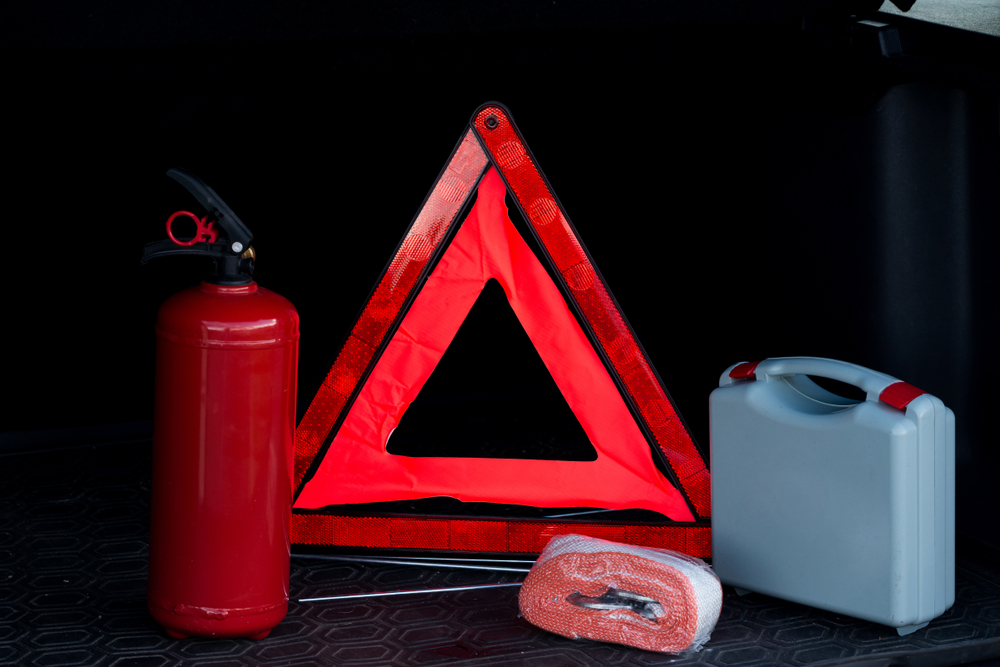
Whether it is an accident or you are snowed in, it is always prudent to assemble an emergency kit before winter hits. Put these items in your car or truck when the weather turns cold:

  • Blanket
  • Boots and gloves
  • Food, water, and candles
  • Ice scraper
  • Small snow shovel
  • Flashlight with extra batteries
  • Flares
  • Jumper cables
  • First-aid kit
  • Sand, salt, or kitty litter for extra traction

Check The Battery

Cold Illinois winters can be tough on your car battery. First, batteries tend to die because of the extra strain the cold weather puts on them. Also, because of thicker motor oil, car engines must do more work in cold weather.

Have an automotive parts store check your car or truck battery every winter. Make sure there is not any corrosion on the positive or negative terminals. A reputable car care professional can tell you if the battery needs to be replaced.

Check The Cooling System

It is recommended to flush and refill the radiator every year. Also, check the coolant level and concentration before winter starts. The standard recommendation is 50/50 antifreeze and water.

Check The Brakes

If your brakes squeak, get them checked before the snow flies. Winter has many wet and icy days, leading to rust that can damage the brake pads and rotors. Also, salted streets are hard on car and truck brakes.

Many car experts say drivers should have the brakes checked before and after winter. We all use our brakes heavily in lousy weather, so it is always wise to ensure they are in peak condition.

Remember, you can avoid many car accidents by never slamming on the brakes on a wet road. Today’s vehicles are equipped with anti-lock brakes, so steady pressure is the way to go. Hitting the brakes too hard can cause a skid and a severe auto accident.

Carry Glycerin In The Trunk

This is for unfreezing door locks, which can be a significant problem in freezing weather. It can break off if you try to force the door open with a standard key. Glycerin is quite effective for deicing and can be found in any auto parts store.

Check The Vehicle Exterior

You should check the outside of the vehicle to ensure the headlights and other lights are working. Many automotive experts recommend cleaning the exterior light lenses annually. Replace any brake lights that are burned out.

Keep The Gas Tank Full

You should always have a full tank of gas when driving in the winter. If there is too much space in the gas tank, moisture accumulates. This will dilute the gasoline and stress your car’s motor and pumps. In addition, if the moisture freezes, it can cause severe damage. Keeping a full tank also reduces the chances of being stranded in freezing weather.

Check The Tire Pressure

It is vital to keep track of tire pressure when temperatures plunge. Tire pressure drops dramatically with air temperature. You can lose as much as 1 PSI with every 10-degree loss of temperature.

Driving around on wet roads with low tire pressure will wear the tires out faster. It can even cause tread separation in a car accident. Further, tires do not perform as predictably when they are under-inflated.

If you check tire pressure and find at least one is low, get them filled for free at a gas station. Then, when the weather warms in spring, let a pound or two of air out.

Car Accident Liability In Snow Or Black Ice

Keeping your car or truck in top condition when winter weather hits reduces your chances of an accident. However, what happens if you are in a crash in snow or on black ice? Who is to blame?

Car and truck accidents due to black ice or snow usually involve several vehicles and severe injuries. This means several crash investigations and auto insurance policies. This is why when you are injured in an accident you should call the injury attorneys at https://claimyourjustice.com This situation is where you want to have a Palatine car accident lawyer representing your interests. We know how to investigate your injury case and then negotiate with insurance companies, especially when liability is uncertain.

Everything depends on the details of the winter accident. For example, if another car slid on black ice and slammed into you at a stop light, you may get compensation from your policy’s personal injury protection. Or, your attorney may file a claim with the other driver’s policy.

Many drivers are shocked to discover they still may be liable if they are in a car accident during a blizzard. Of course, your insurance should take care of the problem if it is a single-vehicle accident. But when you slide into another car, you cannot blame the weather. We all have a legal obligation to drive safely in all conditions.

Some drivers argue they should not be liable if they lose control in the snow. However, every driver knows the risks of driving in snow and ice. Illinois law requires you to drive safely no matter what. Fortunately, having your car in tip-top shape as winter approaches reduces your odds of a fender bender or worse.

Contact Our Palatine Car Accident Lawyers Today

If you have been in a severe car accident, you could have thousands or tens of thousands of dollars of medical bills you cannot pay. Perhaps you cannot work and are disfigured or in substantial pain from the accident. How will you recover and survive financially? There is help available.

Our Palatine car accident lawyers fight tirelessly for our clients’ legal and financial rights. As a result, we regularly win impressive recoveries for car and truck accident victims in Illinois. Whether you have a back injury, head trauma, or broken bones, we can get you the compensation you need to regain your health.

Claim Your Justice attorneys also serve the communities of Hoffman Estates, Mount Prospect, Rolling Meadows, Grove Village, Schaumburg, Hanover Park, Arlington Heights, and Oak Streamwood and clients in Wisconsin, and Kentucky. Please contact Claim Your Justice at 847-434-3555 to receive justice in your car or truck accident case.

Disclaimer

This information is not intended to be legal advice. You should consult an attorney for advice regarding your individual situation. We invite you to contact us and welcome your calls, letters, and electronic mail. Contacting us does not create an Attorney-Client relationship. An Attorney-Client relationship is created when you sign a written agreement with our law firm. Please do not send any confidential information to us until such time as an Attorney-Client relationship has been established.

Nursing Home Injury Cases With Keith Shindler

nursing home abuse

Welcome to another edition of Facebook Live for Claim Your Justice. The purpose of these Facebook live sessions is to educate the Facebook community and our future clients about their rights. Today, we are going to talk about nursing home cases.

This is a very near and dear topic to me right now because I have an elderly relative who is in the process of moving from independent living to a nursing home. It’s a sensitive topic because things, sometimes bad things, happen when your loved one is in a nursing home. I figured it was a perfect opportunity for me to discuss this.

For any personal injury claims, make sure you reach out to Claim Your Justice, you can reach us on the web at ClaimYourJustice.com. Or you can reach us by telephone at 847-434-3555. I am lucky enough to be assisted today by Jessica Wong Barrera, she did such a wonderful job last time we invited her back. Jessica, you have some questions that we discussed that we think will be helpful to the Community. Let’s roll.


Q: Are there separate rights that apply to residents in nursing homes?

A: Yes. We generally have the same rights for injury cases when it comes to a slip and fall case, a car accident case, a wrongful death case, and so on. However, nursing homes are governed by the Illinois Nursing Home Act, and the Nursing Home Act provides a certain set of rights statutorily. So, when you have an auto accident case, it’s based on common law, negligence, duty breach of duty, proximate cause, and damages.

In every case everywhere in the United States, those are the analyses that need to be made. In Illinois, the Nursing Home Act provides certain rights that you have statutorily that you may not have if you are just at an independent care living facility. In a nursing home, you have a right to make sure you get your mail, make sure you have access to a telephone, and make sure you can get visitors. That is important.

You also have a right to see your own doctor if you have health insurance or money to pay at your expense. Those are two significant rights that are vested by the Illinois Nursing Home Act. Of course, you have a right to be free from abuse and neglect. Those terms of abuse and neglect are defined within the Illinois Nursing Home Act. That is another right you would think is a given.  However, this is because it’s by definition, and there is a push and pull between the nursing home lobby that can only do certain things and the residents who need to make sure they have an enhanced level of care.

Q: Is there a definition of what exactly a nursing home includes?

A: If you are in a facility with more than three residents who are not related, that facility will be defined as a nursing home. Now I know three seems like a small number and you’re not going to have a nursing home with such a small population of residents. Some of these nursing homes have 200 residents. There is one not too far from my house, they may have 300 residents there. By definition, it is more than three people in a facility where the staff is charged with keeping and taking care of the residents.

Q: Is there a number one reason why many residents of nursing homes are injured or otherwise harmed?

A: I think we’ve all heard scenarios where elderly people suffer bed sores, and the number one source of injuries that are suffered by residents of nursing homes would be bed sores. Now bed sores are what we call them. However, medically and from a nursing perspective, they are called pressure ulcers. It’s a painful condition. It happens frequently because the patient is not as mobile.

Sometimes they are seriously medicated, and they can’t move around as much. They’re lying in the same position for some time and the body’s reaction to that is to form a pressure ulcer. The injuries can become quite dramatic as they progress to a certain degree, and they can become infected. To answer your question, the number one type of injury would be a bedsore pressure ulcer.

Q: What types of injuries are common to nursing home residents?

A: Well, you have a person who trips and falls. Listen, I’m in my 50s, and there are times, on certain terrain, I feel like I could trip and fall. These fall-down cases are common in nursing homes. Someone may need a walker, they don’t have a walker, they try and walk, and they fall. Someone may be walking with a walker, and there’s an obstruction in the floor that shouldn’t be there which causes them to trip and fall. Or it could be that situation with a cane.

The number one injury we see is pressure ulcers. Number two is the fall-down cases. Some of the falls can be really bad, you never want to see an 80-year-old man or woman needing to undergo hip replacement surgery. That is not something you want your relative to have to go through just because they were not properly cared for. Sometimes in the fall-down cases, it could be that the resident should have had the side rails up on their bed and the nursing home perhaps forgot to raise the side rails, and the resident falls out of bed.

You can have all sorts of injuries. If a person is at the level where they need assistance going to the bathroom, and the proper lift is not available, you could have an injury where someone is going to the bathroom and falls. Other types of injuries you could have are when the proper medication is not administered. Either the wrong medication is given, the medication is not given to the patient at the recommended time, or the wrong dosage is given. You have got the bed sores, you got the fall down cases, you have got the failure to administer the proper medication. Those are probably the three that we most commonly see.

Q: Can you talk a little more about elder abuse? We’ve talked about lack of treatment, but what about elder abuse?

A: First and foremost, elder abuse is terrible. Elder abuse is common. The case I referred to just a few minutes ago was in the news recently. There is a nursing home in Texas, the family is concerned about the care that their relative is getting so they install a surveillance camera in the relative’s room. They get a call from the nursing home saying that their relative was injured and fell out of bed. Well, what they see in the video is that after he fell out of bed, he was abused by the staff while getting back into bed.

There was a lawsuit, and there was a big multi-million dollar recovery made because of the elder abuse. Part of elder abuse and this is a topic I meant to cover earlier, is that there is a staffing issue. Every day in the news we hear that there is a nationwide staffing shortage. It is a problem in nursing homes because many of the injuries that are suffered by residents are injuries that may not have happened if there was proper staffing.

Staffing shortages can look different. One example could be when they do not have enough people on staff. The second could be when they hire a staff member who is not properly qualified, not properly supervised, and not properly trained. I would consider that a staffing shortage because you do not have the right person on the job. This case in Texas was a true elder abuse case, the elderly resident or their family is paying to be in this nursing home, to get the proper care, to get the proper staffing, and they don’t get that.

Then worse, you could have a resident of the nursing home being sexually abused. There are some sick people out there. Sometimes they find their way into the wrong situations, wrong employment systems, and wrong employment roles, and you could have a relative who’s sexually abused. It’s disgusting, the nursing home is certainly responsible. With elder abuse, you could have physical abuse, sexual abuse, and you could have some type of mental abuse. Mental abuse for example where a caretaker refuses to care for the resident unless the resident acts a certain way. That’s abuse, and that can turn into malnutrition for the resident.

Q: What does the average settlement in an elder abuse case look like?

A: These cases have a wide range in terms of the value you will see. You have the basic elements of damages, you could have the additional medical bills that are required for an injury that a resident suffers, and you certainly have pain and suffering, which is a common ingredient for any personal injury case. Also, you may have a disfigurement. We talked a moment ago about the case where the person fell, broke their hip, and needed a hip replacement, they may have a limp that they didn’t have before, they may need a cane that they didn’t need before, they need may need more personal assistance that they didn’t need before. Disfigurement is a big issue.

That also connects with the loss of normal life. Before they fell and needed a hip replacement, they may have been able to walk around the nursing home themselves without any assistance, but with the replaced hip they now need to have some regular and frequent assistance. A lot of it depends on the type of injury. Then, if a person who’s in their 30s has a very serious injury, now that person is going to have to live with that serious injury for the normal life expectancy, let’s call it 72. So that’s 42 years of living with this serious injury.

Now, unfortunately, the value of these nursing home cases is sometimes reduced because a person cannot have a shortened lifespan because of their age. The nursing home may say that person had a debilitating disease, and a medical expert would say they only had three years to live, so that could reduce the value of the case. Then you also have something that could increase the value of the case, which is the history of the care provided by the facility. If you can show a pattern of neglect by the facility. If they’ve had 10 cases in the past several years, we would argue that shows they have gross negligence, which would increase the value of the case. Anything else?

Q: Is the nursing home insured, and does that have anything to do with the settlement?

A: Terrific question. I was talking to another lawyer this weekend and he settled a case where the nursing home went into Bankruptcy. For whatever reason, the nursing home was driven into bankruptcy, and there was a limited amount of money. So the payoff for that person’s client was through bankruptcy. There is generally insurance, but as we’ve talked about in previous Facebook Live sessions, sometimes insurance isn’t enough.

It’s difficult enough to find the right nursing home fit for your relative. but that’s a question you might want to put on your checklist before you admit your relative into a nursing home. Ask about financial viability. Does this facility have one location or 10 locations? It may be a bit of an odd question, but it is your relative, you need to give maximum care and attention to that relative.

If you, a family member, a friend, or anyone you know is injured in an accident. Let Claim Your Justice help those people claim their justice. You can reach us on the web at ClaimYourJustice.com or by phone at 847-434-3555. Thank you and have a successful week.

Disclaimer

This information is not intended to be legal advice. You should consult an attorney for advice regarding your individual situation. We invite you to contact us and welcome your calls, letters, and electronic mail. Contacting us does not create an Attorney-Client relationship. An Attorney-Client relationship is created when you sign a written agreement with our law firm. Please do not send any confidential information to us until such time as an Attorney-Client relationship has been established.

Things You Should Always Have In Case Of A Car Accident

car accident

There were 312,000 car accidents in Illinois in 2019 and about 858 crashes per day. Sooner or later, most Illinoisans get in a car accident, but many do not know what they should have in their vehicles when it happens. Having critical emergency supplies in the car can make a huge difference if you get into an accident.

Below are some essential items you should keep in your vehicle in case of a car accident. Also highlighted are the most important things to remember to do after an auto accident. If you are in a car accident and unsure of your rights, please contact Hoffman Estates car accident lawyers at SJ Injury Law today. In many cases, our attorneys can help obtain compensation for your medical bills, lost wages, and pain and suffering.

First Aid Kit

Even a minor auto accident can have cuts, bruises, and scrapes because of airbags, hitting a part of your body against something on the inside of your car, or broken glass. Also, first responders may not arrive at the crash scene immediately, so carrying a first aid kit in the trunk is recommended. This allows you to manage your or a passenger’s minor injuries until first responders arrive, or you can get to the ER to be checked out.

In addition to bandages, gauze, antiseptic ointment, instant cold packs, aspirin, and other first aid basics, it is wise to have a survival kit in the car, too. The survival kit should contain items that will help if you are in an accident that requires you to stay at the scene for hours or more. Some vital things to include in the survival kit are:

    • Non-perishable food
    • Bottled water
    • Tool to break glass
    • Extra clothing

Fully Charged Phone

Most of us have a cell phone, but it does not do you much good after an accident if the battery is dead. Some drivers prefer having a disposable cell phone in the trunk to use in an emergency. Another option is to have a phone charger in the car and plug your phone in every time you drive. Or use an old cell phone; even if the phone is not on your current mobile plan, you can still use it to call 911 after an accident.

Basic Toolkit

An essential car repair toolkit should include pliers, a screwdriver, an adjustable wrench, and duct tape. While they won’t help with major car repairs, these tools can help get you back on the road after a minor accident.

Jumper Cables

One of the most common road emergencies is a dead car battery. A set of jumper cables is inexpensive and does not take up a lot of space, so have a set in the trunk.

Fire Extinguisher

An overheating car can sometimes even start a fire, so having a fire extinguisher handy is important. Using the fire extinguisher when a fire starts in the engine compartment can prevent the conflagration from getting much worse.

Flashlight and Flares

Being in a car accident at night is scary and hazardous. If you are in a crash after the sun sets, carrying a flashlight and road flares is vital. A flashlight is essential in the dark, especially in rural areas with few streetlights. This tool helps you check for damage to determine if you can drive the vehicle or move it out of traffic.

Without a flashlight, there could be severe damage you cannot see, which makes it dangerous to drive. Remember to carry extra batteries and check them every quarter.

Road flares are essential for safety after accidents, especially in the dark. First, flares make the accident more visible and direct first responders to the area. Flares also help other drivers see your vehicle and avoid additional accidents.

Contact Information

If you are in an accident and unable to communicate with first responders, it is critical to have your name, medical information, and emergency contact information in the car. Having your cell phone and wallet on you in the vehicle may be sufficient. You also can keep a written list of this vital information in the glove compartment.

Things to Remember After a Car Accident

The items highlighted above in your vehicle can significantly help after a car accident. It also is important to remember to do the following after an auto accident:

Check If Anyone Is Injured

Illinois law requires you to see if anyone is injured after a car accident. If so, you need to call 911 or the local police to get medical assistance. In addition, you should never leave the scene of an accident until the police permit you.

Get Out of Danger

If it is a minor car accident and you are not hurt, move your vehicle slowly to the side of the road so it does not stop traffic. Moving the car keeps you out of danger and prevents additional accidents. Turn your blinkers on and put out road flares from your emergency kit.

Remember, you may be upset after the accident even if you are not hurt. In addition, you may not think as clearly as you usually would, so be careful around traffic. Getting as far away as possible from traffic is best to stay safe.

Contact Law Enforcement

You should always call the police to report a car accident. However, law enforcement may not always respond. Some police departments tell you to report the incident online. They may not always send a police officer to the scene if it is a minor crash.

If the police come to the scene, write down their badge number and contact details. Then, get a copy of the accident report from the officer. If the police do not come, go to the nearest police station to get a copy of the accident report.

You should always report even minor car accidents to the police. The other driver may ask you not to report it, but this leaves you open to a hit-and-run charge if they decide to change their story later.

Gather Evidence

A Hoffman Estates car accident lawyer will collect car accident evidence, but you can help by starting the process yourself. If uninjured, use your cell phone camera to photograph accident damages, vehicle positions, and the overall accident scene.

Next, take photos of the driver’s licenses of others involved in the crash and their insurance information. Also, take pictures of every driver’s license plate. Finally, get their contact information if there are witnesses to the accident. Your attorney will want to speak to witnesses as soon as possible before they start forgetting what happened.

See Your Physician

Many people feel fine after a car accident. But many injuries may not become evident for one or two days. For example, you could bang your head on the window and feel ok. But after a day, you could have headaches or memory loss. Or you could wake up the next morning and find you cannot move your head; whiplash symptoms also can take a few days to appear.

If you wait to go to your doctor, it could jeopardize an accident claim later. Also, if you file a personal injury lawsuit, the other driver’s insurance company will likely argue your injury was unrelated to the accident.

Don’t Admit Fault

Emotions often run high after a car accident, and you may say something that hurts your car accident claim. It is best not to say anything to other drivers except to exchange information. Never take responsibility for the accident, even if you are at fault. It is always best to say as little as possible to give your car accident attorney the best chance to obtain fair compensation for you.

Report The Accident to Your Insurance Company

It tempts some drivers to make a cash agreement to avoid reporting the incident to their insurance company. However, not calling your insurance provider is a risk; the other driver may not have insurance. In addition, if you have more severe injuries or property damage than you thought, you may need to tap your policy’s underinsured and uninsured motorist coverage. Reporting the incident to the insurance company as soon as possible is the safest action.

Contact Hoffman Estates Car Accident Lawyers Today

Anyone in a severe car accident probably has medical bills, rehabilitation, lost wages, and pain and suffering. You could be eligible for compensation if you have damages after a car accident.

Our Hoffman Estates car accident lawyers have fought for the rights of clients for more than 50 years. As a result, we obtain significant settlements and awards for our personal injury clients in Illinois. Our attorneys focus on personal injuries, auto accidents, slip & fall incidents, dog bites, and wrongful death.

SJ Injury Law attorneys serve Schaumburg and the greater Chicago area including the communities of Hoffman Estates, Mount Prospect, Rolling Meadows, Grove Village, Hanover Park, Arlington Heights, Oak Brook, and Streamwood. Please contact SJ Injury Law at 847-434-3555 for a complimentary consultation.